OCD attack or panic attack? How to tell
 The short answer
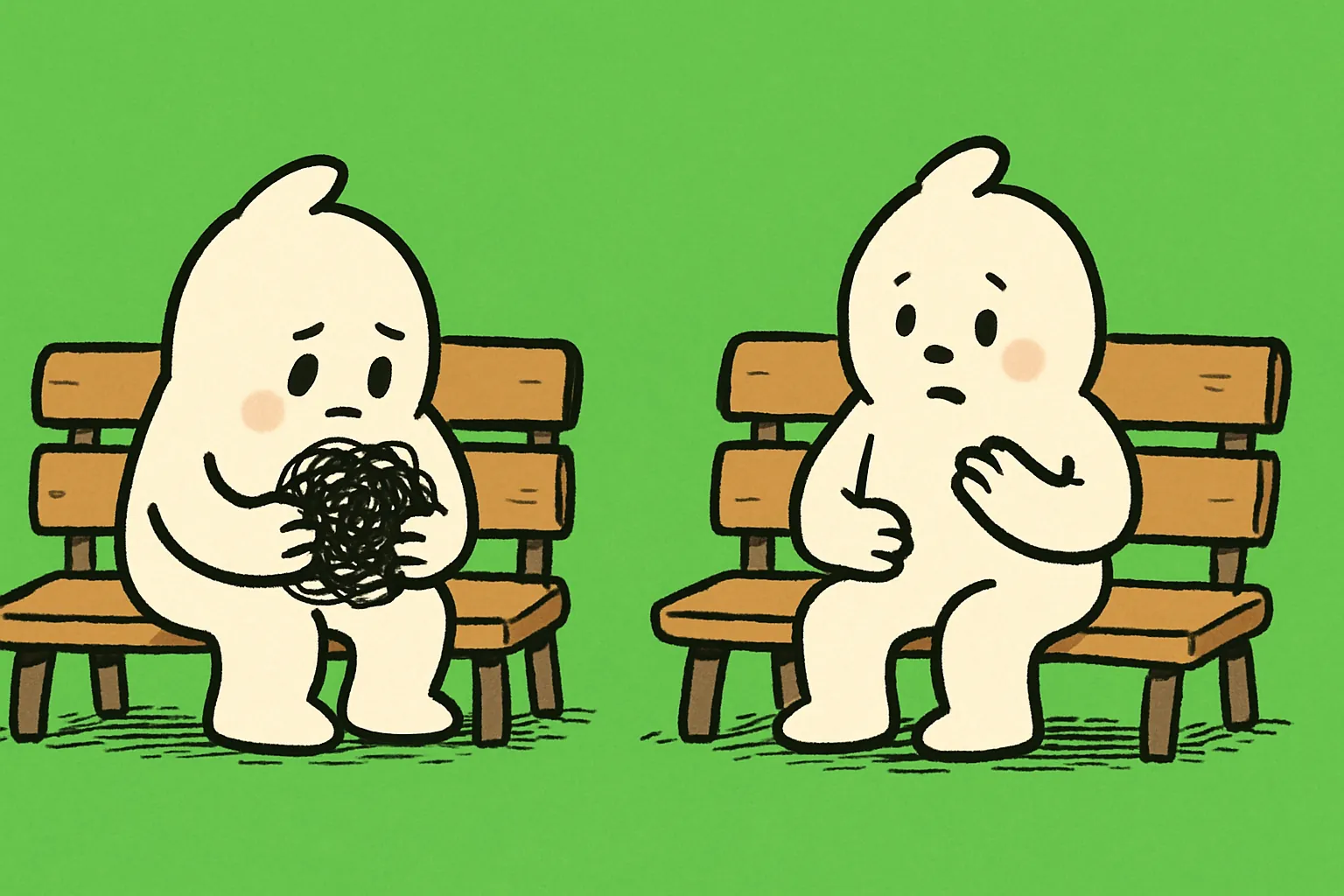
An OCD attack starts with a thought and the urge to fix it: the spike stays tied to a what-if, and it can simmer for hours while you check, replay or ask. A panic attack is a burst of body alarm, racing heart, breathlessness, dizziness, that peaks fast and fades within minutes. They overlap, and you can have both at once. Either way, the response is the same: don't fix it.
 In the middle of one right now? Ride this one out with the free wave, then come back.
What people mean by an “OCD attack”
“OCD attack” isn’t a clinical term, but anyone with OCD knows the thing it describes. A sticky thought lands, the spike hits, and within a minute you’re inside the loop: replaying, checking, googling, arguing, hunting for the one piece of certainty that will shut it up. It feels like an emergency because it’s being treated like one.

The engine is meaning, not the thought. Almost everyone has unwanted intrusive thoughts, including the ones you’d never say out loud. What turns one into an attack is the meaning you hand it and what you do to get rid of it.
So the defining feature of an OCD attack is content. It’s about something. There’s a what-if at the center, and a job you feel you have to do.
What’s a panic attack?
A panic attack is the body’s alarm going off at full volume, fast. An abrupt surge of intense fear that peaks within minutes, with some mix of pounding heart, breathlessness, chest tightness, sweating, shaking, dizziness, numb hands, a sense of unreality, and the feeling that something terrible is happening right now.
What keeps it going is different. In the standard model, panic runs on a frightened reading of the body’s own sensations. Your heart races, you read the racing as danger, the reading pushes the alarm higher, and it loops in seconds rather than hours.
So the defining feature of a panic attack is sensation. It’s usually about the body and about the feeling itself, not a what-if about the door, your character, your relationship or your health history.
How can I tell which one I’m having?
Honestly: sometimes you can’t, and nobody online can diagnose you. But there are rough tells.
- What’s at the center. OCD attack: a thought, image or doubt. Panic attack: a sensation, and fear of what it means.
- Speed. Panic tends to come out of nowhere and peak within about ten minutes. An OCD spike can build slowly and then simmer all evening.
- What you want to do. Panic makes you want to escape or get help right now. OCD makes you want to resolve, to check, to know for sure.
- What would settle it. If a definite answer would settle it, that leans OCD. If the body calming down would settle it, that leans panic.
- Afterward. Panic tends to leave you drained and shaky. An OCD attack tends to leave you still chewing.
One warning. Working out which one it was can become its own compulsion. If you’ve read that list four times looking for the version that makes you certain, that’s the loop, not research. Maybe, maybe not, and then get on with the response.
Where do OCD and panic overlap?
A lot, because they run on the same alarm hardware.
An OCD spike can tip into a full panic attack when the fear gets loud enough. Panic sensations can become an OCD theme of their own, where the what-if is “what if this never stops” and the compulsions are pulse checking, chest scanning and avoiding the shop where the last one happened. And other anxiety disorders, panic included, commonly sit alongside OCD, so having both isn’t unusual or a sign that something has gone especially wrong with you.
Which one it is matters less in the moment than you’d expect, because the way through is nearly identical: stop trying to make it stop.
How to get through either one, step by step
- Name it without solving it. “This is an attack. Maybe it’s OCD, maybe it’s panic.” That’s enough. You don’t need the label to do the next step, and chasing the label is itself a compulsion.
- Stop the fixing moves. No checking, no symptom googling, no confessing, no asking the person next to you whether you’re okay. Checking again leaves you less sure than before you started, and reassurance gets asked for more often, from more people, and satisfies less each time.
- Let the wave rise. Alarm peaks and falls on its own when nothing is fighting it. That’s urge surfing, and a single short session of it left smokers less driven by cravings for the following week. If you want something to hold onto while it peaks, there’s a free wave to follow in your browser.
- Anchor the body without trying to switch the alarm off. Long slow out-breath, feet on the floor, name five things you can see. Slow breathing does settle the body’s stress response, but use it to stay put, not to make the feeling leave. The moment it becomes the thing you do so the attack can’t happen, it’s a ritual.
- Don’t scan to see if it’s working. Rating your anxiety every thirty seconds is checking, and it keeps the spotlight exactly where the fear wants it.
- Go back to what you were doing, and take it with you. Same room, same task, uncomfortable passenger included. Sitting still until you feel normal again is avoidance in a sensible coat.
- Afterward, write one line. Not what you felt, what you didn’t do. “Spike at 9pm, didn’t google it.” That line is the rep.

If you want the longer version of the response side, it’s here: how to stop an OCD spiral.
What makes both of them worse?
Three things, reliably.
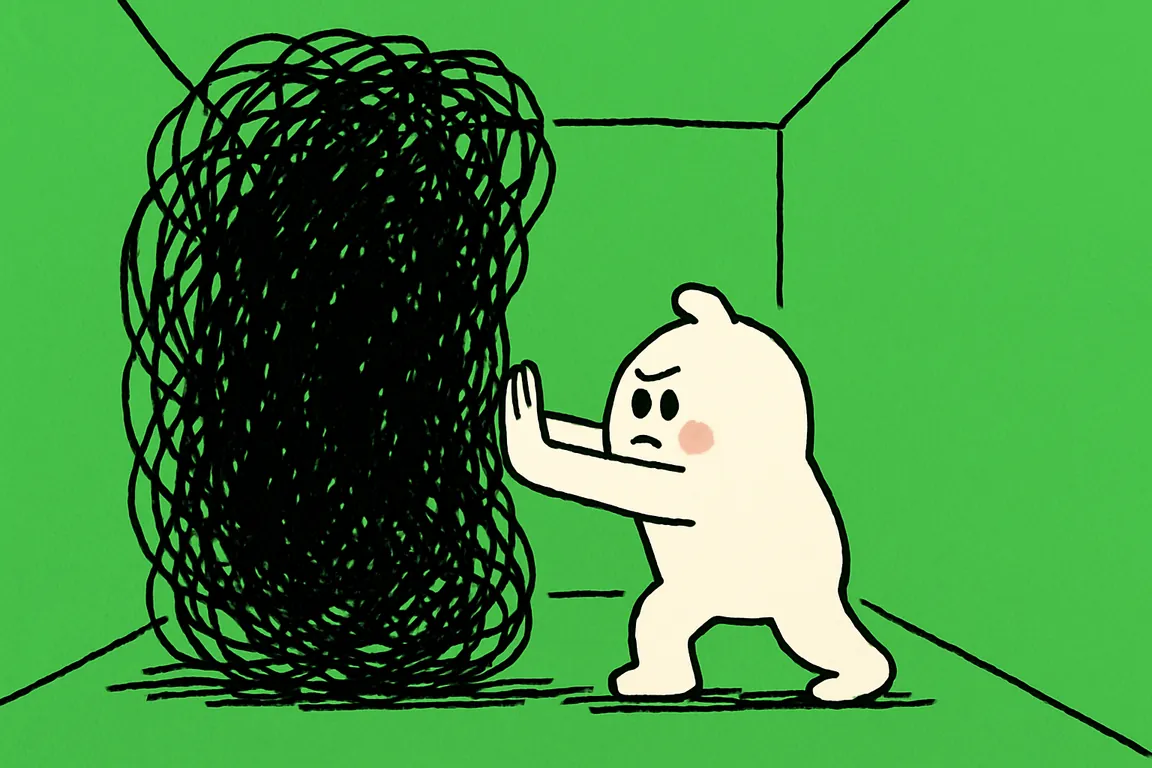
Suppression. Shoving the thought or the sensation out of your head brings it back more often, and pooled across controlled studies, suppression doesn’t reduce a thought and can rebound.
Avoidance. Skipping the train, the shop, the conversation, the thought. It buys you one quiet evening and charges you a wider no-go zone.
Certainty hunting at 2am. Nothing you find at 2am holds by morning, because the doubt was never a lack of information.
When is it time to get help?
If attacks are frequent, or you’re rearranging your days around them, that’s the signal, whichever kind they are. OCD and panic both have real treatments, and both are built on facing the thing rather than managing it.
For OCD, that’s exposure and response prevention. ERP within CBT is the recommended first psychological treatment, and pooled across dozens of randomized trials it beats waiting lists, placebo treatments and medication comparisons. Guided and at-home versions have evidence behind them too, which you can read about on the science page.
For panic, the standard approach includes deliberately bringing on the sensations you’re afraid of, so the alarm learns something new, and that treatment has been tested in randomized trials since the late 1980s. New or unexplained physical symptoms are worth taking to a doctor once, though. That’s their job, not google’s, and not a job you can do at 3am.
And if any of this has you thinking about ending your life, please don’t ride that one alone. Surf OCD isn’t a crisis service. Find a helpline in your country and talk to a person tonight.
 Straight answers
Can an OCD attack cause physical symptoms?
Yes. The same alarm system fires, so a spike can bring a pounding heart, tight chest, nausea, shaking and hands that don't feel like yours. What marks it as OCD is that a thought or doubt sits at the center and you feel a job needs doing. Reading the sensations as proof of anything is where the loop gets fed.
How long does an OCD attack last?
There's no fixed number, because it depends on what you feed it. Panic usually peaks within about ten minutes and burns out. An OCD attack can simmer for hours, because every check, search or request for reassurance restarts the clock. Left unfed, the spike rises and falls like a wave. Practice riding them and they tend to get shorter.
Can OCD cause panic attacks?
An OCD spike can escalate into a full panic attack, and plenty of people have both. Panic sensations can also become a theme of their own, where the what-if turns into "what if this never stops" and the compulsions are pulse checking and avoiding places. Whether one caused the other isn't something you can settle from inside the attack.
What if I can't tell which one it is?
Respond the same way, because the response barely differs. Name it, drop the fixing moves, let the alarm peak without monitoring it, keep your feet on the floor, then go back to what you were doing. Pinning down the label mid-attack usually turns into another compulsion. Maybe it's OCD, maybe it's panic, and you can ride it out either way.
 Keep reading
Written by Edwin Simonds and checked against every source cited above. Not medical advice.
Ride the next one out
A free urge-surfing wave, right in your browser. No app, no sign-up, nothing recorded. The same tool lives in Surf OCD's free SOS.
Surf an urge now