Why does OCD feel so real?
 The short answer
OCD feels real because your brain treats the thought as information, not noise. Almost everyone has intrusive thoughts; OCD attaches meaning and urgency to them, and your alarm system fires on a maybe. Then you read the fear in your body as proof. Checking, googling and asking for reassurance make it feel realer, not safer. Maybe, maybe not is the honest answer.
What people mean when they say “it feels so real”
It’s the line in almost every thread. “I know this is probably OCD, but this one feels different. This one feels so real.”
Not vague. Specific. Detailed. It arrives with the weight of information rather than the lightness of a passing thought, and it brings a conviction that this time you’re not spiralling, you’re noticing something true.
If you’ve had that feeling about more than one theme, that’s worth sitting with. The content changes: contamination one year, a harm thought the next, then a doubt about your relationship, then something you said at fourteen. The feeling that this one is the real one travels with each of them. It isn’t attached to the fear. It’s attached to the process.
Why does a thought feel like evidence?
Almost everyone has unwanted intrusive thoughts. In the classic study, most people without OCD reported thoughts with the same content as clinical obsessions, and that holds across cultures, where nearly everyone reported an intrusive thought in the previous three months. So the arrival of the thought isn’t the OCD part. Most people get similar content and pass it off as noise.
What’s different in OCD is how the thought gets read. Thought-action fusion, the sense that thinking something is nearly as bad as doing it or makes it more likely to happen, is tied to OCD. Once a thought is treated as news, about the world or about your character, it stops being something you had and becomes something you have to handle.
That’s the machinery behind “feels so real”. What turns a normal intrusion into an obsession is the meaning you give it and what you do about it, not the thought itself. Obsessions grow when a thought is read as a catastrophe about who you are. Realness isn’t a measure of truth. It’s a measure of how much importance the thought got handed on the way in.
Why does your body act like it’s already happening?
Your alarm system doesn’t fact-check. It fires on “maybe”, and it fires hard: heart, stomach, heat, that drop of dread. It’s built to be wrong most of the time, because the cost of missing once feels unbearable.
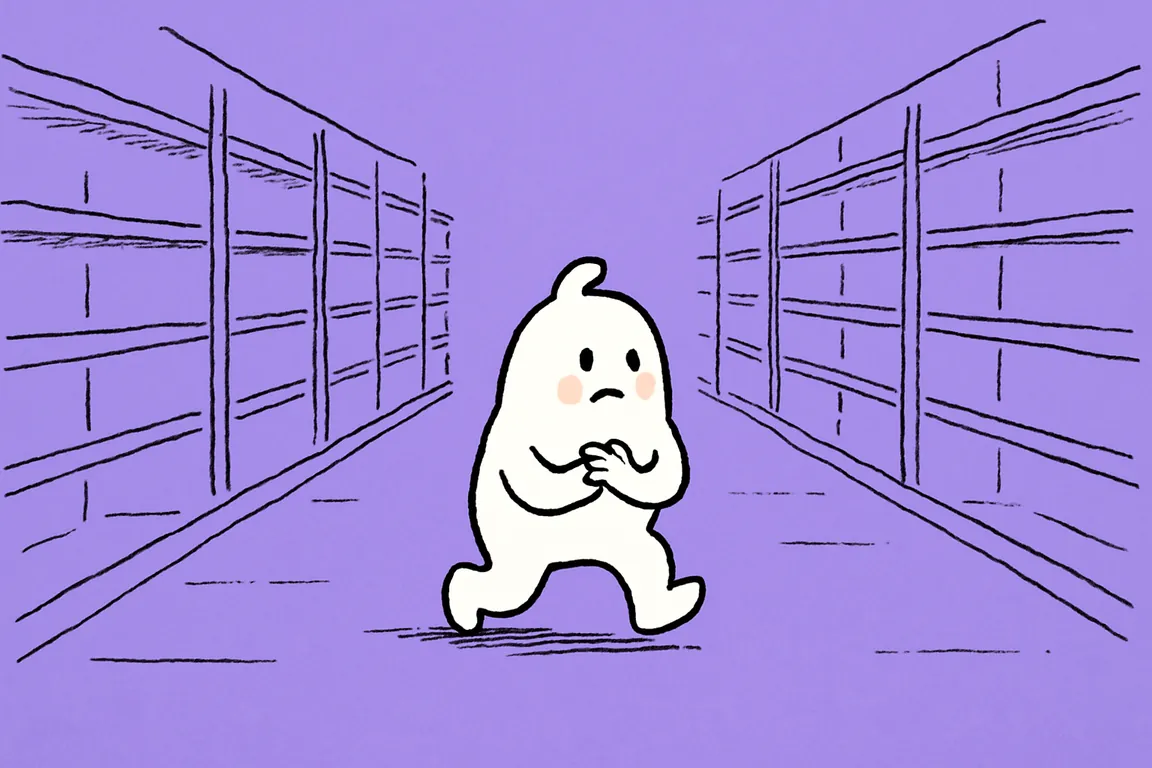
Then comes the second turn of the screw. You read the body as proof. “I wouldn’t feel this sick if there were nothing in it.” Fear starts working backward as evidence for the thought that set it off, and that loop runs fast. If the physical surge is the loudest part for you, it’s worth knowing how an OCD spike differs from a panic attack, because from the inside they can look identical.
Here’s the awkward bit: feeling certain and being right use the same signal in the body. There’s no separate sensation for “this one is true”. That’s why conviction is such a poor instrument in this particular job.
Why does looking for certainty make it feel realer?
This is the part most people don’t expect. The things you do to work out whether the fear is real are what keep making it feel real.
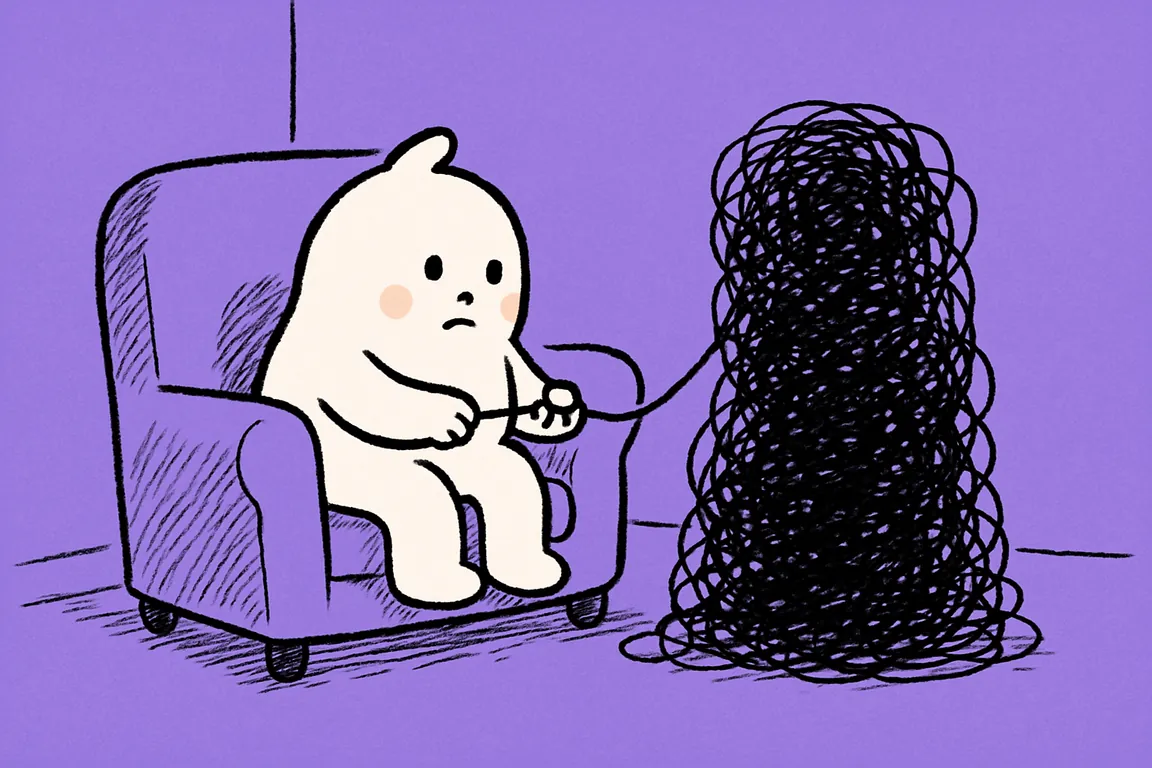
Checking again and again makes you less sure, not more: after repeated checking, people trust their memory of what they checked less. Reassurance behaves the same way. People with OCD seek it more often, from more people, and are less satisfied by the answer.
Mental review is the sneakiest version, because it leaves no trace and doesn’t look like a compulsion. You replay the scene, hunt for a feeling, run the scenario out to the end. Each pass adds detail, and detail is part of how your mind judges whether something actually happened. The more vividly you imagine an event, the more confident you can become that it was real.
And the whole engine runs on the need to know. Needing to be certain is a core feature of OCD, especially for people whose compulsion is checking. Certainty-seeking doesn’t deliver certainty. It sharpens the question.
Does “it feels so real” mean it’s true?
Maybe, maybe not.

That isn’t a dodge. It’s the only honest answer, and it’s the one OCD can’t use. Nobody can hand you proof about your own future behavior, your motives, the inside of your mind, or whether you locked something three hours ago. Someone might tell you what they think. You’d feel better for a minute, and then the doubt would come back needing a fresher answer, phrased more precisely. That’s not because they lied to you. It’s because relief from reassurance has a short shelf life, and asking teaches your brain the question was an emergency.
So we’re not going to tell you the fear is false. We’re going to say the question isn’t answerable to the standard OCD is demanding, and that you can get on with your day with it unanswered. That’s the whole move.
How to respond when a thought feels too real to ignore
- Name the realness, not just the thought. “OCD is here, and it’s doing the convincing thing.” You’re labeling the feeling of conviction as part of the spike rather than as a reading on reality.
- Don’t debate the content. No proving, no arguing, no building your case. If you win the argument, OCD just asks a harder question. The debate is the compulsion.
- Answer with “maybe, maybe not”. Out loud, if you can. It’s the only sentence that doesn’t feed either side.
- Drop the certainty-seeking. No checking, no googling, no confessing, no asking someone to confirm it. Not a smaller amount of it. None, for this wave.
- Let the alarm rise. It peaks and drops on its own once you stop wrestling it. You can ride the free wave if you want something to hold onto for a few minutes.
- Loosen the words. Repeating the sticky phrase over and over, out loud, until it’s just a sound, makes it less believable and less upsetting. It doesn’t answer the question. It changes how hard the words grip.
- Go back to your life unresolved. Pick up the task, the conversation, the evening, with the thought still in the room. That’s the rep.
If you got partway and then did the compulsion, nothing’s lost. There’s more on the shape of that in how to stop an OCD spiral.
What actually changes the feeling that it’s real?
Not evidence. Practice.
The realness loosens when you stop treating the thought as a question that has to be settled, and the reliable way to do that is exposure and response prevention: meeting the trigger on purpose, skipping the ritual, and letting the alarm be loud without obeying it. Each exposure builds new learning that competes with the old alarm, and being surprised by what happens matters more than waiting for anxiety to drop.
The surprise is the point. Very little convinces you that a thought is a thought quite like carrying it around for an hour and finding your life still ran. A specialist is the best place to plan this, and if you can’t reach one, the evidence on guided ERP at home is worth reading, along with how to do ERP at home.
One caution before you go. If what feels real right now includes thoughts of ending your life, don’t ride that one out alone. Surf OCD isn’t a crisis service, so please find a helpline in your country and speak to a person today.
 Straight answers
Why does one OCD theme feel more real than the others?
Because OCD goes for whatever matters most to you, and it recycles. Each new theme arrives with the same conviction the last one had, which is why the current one always seems like the exception. If you look back, the earlier ones felt just as real at the time. That pattern is information about the process, not about the fear.
If it feels real, could it actually be true?
Maybe, maybe not. That's the honest answer, and it's deliberately unsatisfying. No one can give you certainty about the future, your motives or a memory from hours ago, and chasing it is what keeps the fear loud. Treatment doesn't work by proving the fear false. It works by letting you live with the question open.
Why does saying "it's just OCD" feel like lying to myself?
Because OCD demands that your labels be true beyond doubt, and "this is OCD" can't be proved on the spot either. You don't have to believe the label. Use it as a decision about what to do next, not a verdict about reality. Naming it is a way to stop responding, not a claim you have to defend.
Will the "feels so real" feeling ever stop?
It usually loses its grip rather than vanishing. Intrusive thoughts keep showing up for everyone, so a permanently quiet mind isn't the goal. With repeated practice at not answering them, the same thought tends to arrive with less charge and less pull, and the sense of urgent realness fades faster. Nobody can promise it's gone for good.
 Keep reading
Written by Edwin Simonds and checked against every source cited above. Not medical advice.