How to resist compulsions when the urge feels impossible
 The short answer
You can't switch the urge off, and you don't need to. Resisting a compulsion means letting the urge sit there while you don't act on it. Name it as OCD, delay, and ride the urge like a wave: it peaks and eases within minutes when you stop feeding it. Stopping a ritual completely works better than cutting it down, so aim at the whole thing, not a smaller version.
 In the middle of one right now? Ride this one out with the free wave, then come back.
Why does the urge feel impossible to resist?
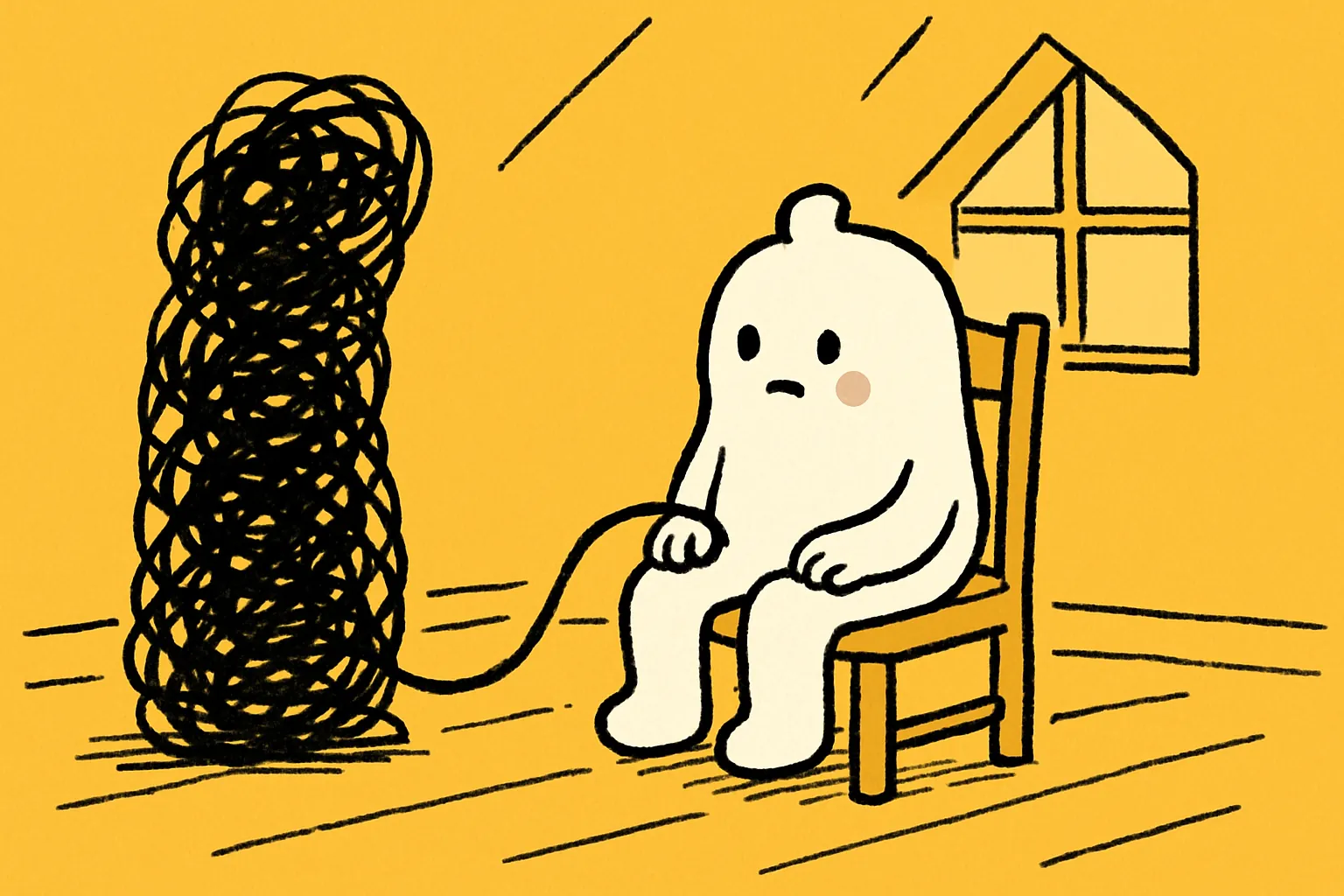
Because it isn’t behaving like a preference. It’s behaving like an alarm.
When the spike lands, a flash of harm, a doubt about the door, a “what if I don’t really love them”, a sense that something you touched is contaminated, your brain files it as an emergency with a solution already attached. The compulsion isn’t something you want. It’s the exit your brain is pointing at, and it’s pointing hard. That’s why “just don’t do it” is such useless advice. Nobody argues themselves out of an alarm.
Two more things stack the odds. First, the urge arrives with a deadline. It feels like the window to sort this out is closing in the next thirty seconds. Second, you’ve done the compulsion before and it worked, in the narrow sense that the relief was real. Short-lived, but real. Your brain files the relief and quietly drops the receipt.
And the meaning you’re giving the moment matters. What turns a normal intrusion into an obsession is the reading you give it and what you do about it, not the thought itself. The urge feels impossible partly because OCD has convinced you that something enormous is resting on the next few minutes. If that’s where you are right now, why OCD feels so real is worth a read later, not mid-wave.
What actually happens if you don’t do the compulsion?
The urge rises, gets very loud, peaks, and comes down. Not because anything got resolved. Because urges are time-limited by nature. They behave like waves, not like taps you have to turn off.
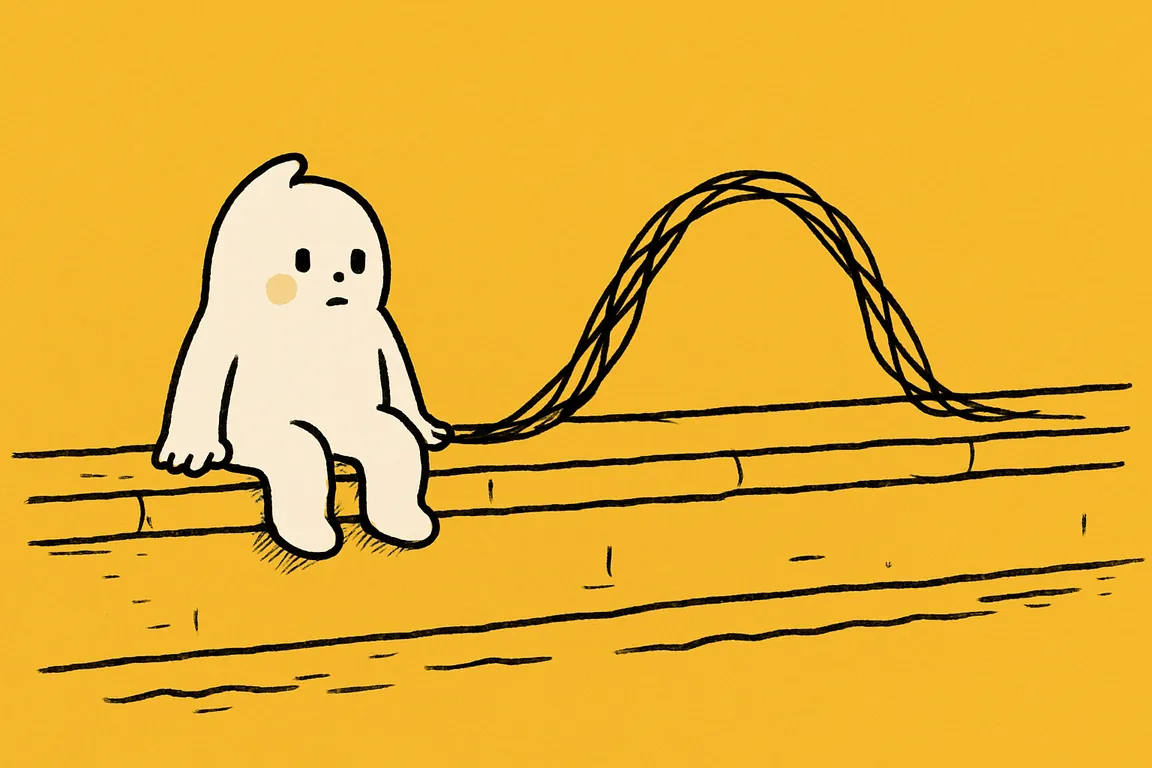
That’s the whole idea behind urge surfing, which came out of addiction work: in one trial, a single short urge-surfing exercise left smokers less driven by their cravings over the following week. You don’t fight the urge, and you don’t obey it. You watch it move.
What doesn’t happen is certainty. You get to the other side of the wave still not knowing. Needing to know for sure is a core feature of OCD, and no amount of sitting with an urge hands you proof. “Maybe, maybe not” is the honest sentence, and it’s the one you’ll be living with.
Here’s the part that makes it worth doing anyway. Each time you face the trigger and skip the ritual, you build new learning that competes with the old alarm, and being surprised by what happens matters more than waiting for anxiety to drop. Every ridden urge is a rep.
How to resist a compulsion in the moment
None of these steps make the urge smaller. They stop you feeding it while it does what urges do.
- Name the urge out loud. “This is an urge, not an instruction.” One sentence, plainly. You’re not talking yourself down, you’re stepping half a pace outside the loop.
- Name the compulsion you’re about to do. Be specific, because OCD hides the mental ones. Checking, washing, re-reading, confessing, googling, asking, and also reviewing, scanning your body for a feeling, and mentally arguing the case. If yours is the invisible kind, how to stop OCD rumination goes deeper.
- Delay instead of deciding. Don’t promise yourself you’ll never do it again. Say: “not in the next ten minutes.” Ten minutes is survivable when forever isn’t. Set a timer and put the phone face down.
- Drop the argument. Stop trying to establish whether the thought is true. That’s the compulsion in thinking form, and OCD always has one more “but what if”. Let the question sit there unanswered.
- Put your attention in your body, not in the thought. Breathe out slowly and longer than you breathe in. Slow breathing settles the body’s stress response, and grounding comes from the distress-tolerance side of therapy. Use them to stay put, not to make the urge leave. If they become the new ritual, they’ve stopped helping.
- Move your hands into your actual life. Wash the dishes you were going to wash, walk to the shop, answer the email. Carry the urge with you. Living the next ten minutes with an uncomfortable passenger is the training.
- Don’t check whether it worked. Scanning to see if the urge has gone is checking. When the ten minutes are up, set another ten if you can.
Does delaying count, or is that cheating?
Delay counts. It’s the most useful bridge there is when full resistance feels out of reach, because it breaks the link between the spike and the automatic hand movement.
But watch what delay turns into. If you spend the ten minutes ruminating, praying, mentally rehearsing or holding your breath until you’re allowed to do the ritual, you’ve swapped one compulsion for another and the clock is just a new rule. Delay is meant to be uneventful. Boring, even.
And the aim is that the delay eventually goes nowhere. You delay, and then you don’t do it, because the moment passed and you were busy.
Is cutting a compulsion down as good as stopping it?
No, and this is worth knowing before you settle for a shorter version. Pooling the trials, exposure works better when rituals are stopped fully rather than just reduced. Half a ritual still teaches your brain that the ritual was needed.
The same goes for the disguised versions. One check instead of six is still a check, and checking again makes you less sure of what you checked, not more. Asking your partner once “in a casual way” is still asking, and people with OCD seek reassurance more often, from more people, and are less satisfied by the answer. If that’s your pattern, how to stop asking for reassurance has the specifics.
So aim at the whole compulsion. You’ll miss sometimes. Aim there anyway.
Why “just this once” is the trap
“Just this once” is the most persuasive sentence OCD owns, because it’s technically true every single time. This one check really won’t ruin your life. It’s just that OCD will say it again tomorrow, and the day after.
The cost isn’t the thirty seconds. It’s what those thirty seconds teach. Relief works like a reward, and it lands right after the ritual, so the ritual gets stronger. People reach for reassurance to feel certain and to hand the responsibility to someone else, and the relief doesn’t last, so the urge comes back.
A more honest version of the deal: “I can do this once and pay for it later, or I can be uncomfortable now and not pay for it.” Put like that, it’s still hard. It’s just not confusing.
What to do after you’ve given in
First, nothing. No post-mortem, no promises, no working out how far back this has set you. Analyzing the slip is another compulsion, and beating yourself up about it is a third.

What you didn’t do is break a streak. Recovery isn’t a streak, it’s a skill you’ve been practicing, and one ritual doesn’t delete the reps. The next urge will show up soon enough, and it’s a clean one. Ride that.
It also helps to know that the work gets harder before it gets easier for a lot of people, which is normal and not a sign it’s going wrong: does ERP make you worse before it gets better covers that honestly.
Riding the urge instead of white-knuckling it
White-knuckling is you gripping the sink and waiting for the urge to admit defeat. That’s still a fight with the urge, and you’ll lose enough of those to give up. Surfing is different. You let the urge be as loud as it likes and you stop treating its volume as information.
Done on purpose, over and over, in different places and moods, that’s exposure and response prevention, and varying the practice and dropping the safety behaviors is what makes the learning stick. One ridden urge in a supermarket is worth more than an hour of planning at the kitchen table. If you want to build that into a plan, how to do ERP at home is the starting point, and the evidence behind guided ERP is there if you want to check our working.
Right now, though, you don’t need a plan. You need to get through this wave without the ritual. Surf OCD has a free timed exercise for exactly that moment, so ride the free wave and let this one pass.
If the urge is tangled up with thoughts of ending your life, that isn’t something to surf alone. Surf OCD isn’t a crisis service, so please find a helpline in your country and talk to a person today.
 Straight answers
How long does an OCD urge last if you don't act on it?
Usually minutes, not hours. An unfed urge tends to peak fairly fast and then ease off, though it can come back in another wave soon after. What stretches it out is arguing with the thought, checking whether the urge has gone, or doing a smaller version of the ritual. The urge dropping doesn't mean you got certainty.
Is it bad to distract myself instead of doing the compulsion?
It depends what the distraction is for. Getting back to your actual life while the urge is still there is good practice. Frantically scrolling so you never have to feel the urge is avoidance, and avoidance keeps the loop fed. The test is simple: are you willing to let the urge come along, or trying to escape it?
What if resisting the compulsion makes the anxiety worse?
It often does, at first. Skipping a ritual usually spikes anxiety harder than giving in, which is why the first few attempts feel like proof you're doing it wrong. You're not. The spike is the alarm protesting, and it settles as the new learning builds. Pick urges you can actually sit with rather than the hardest one you own.
Can I resist compulsions without doing full ERP?
You can resist individual urges on your own, and it helps. Doing it in a planned, repeated way is what shifts things longer term, because scattered resistance in bad moments is harder and teaches less. Many people start with self-guided practice and get further with a therapist or structured program when that's available to them.
Why do I feel guilty after giving in to a compulsion?
Because OCD turns the slip into a second theme. The guilt spiral, replaying it, promising it'll never happen again, deciding you've ruined your progress, is itself a mental compulsion. Notice it, don't argue with it, and put your attention on the next urge instead. One ritual doesn't erase the ones you rode out.
 Keep reading
Written by Edwin Simonds and checked against every source cited above. Not medical advice.
Ride the next one out
A free urge-surfing wave, right in your browser. No app, no sign-up, nothing recorded. The same tool lives in Surf OCD's free SOS.
Surf an urge now