How to stop OCD rumination
 The short answer
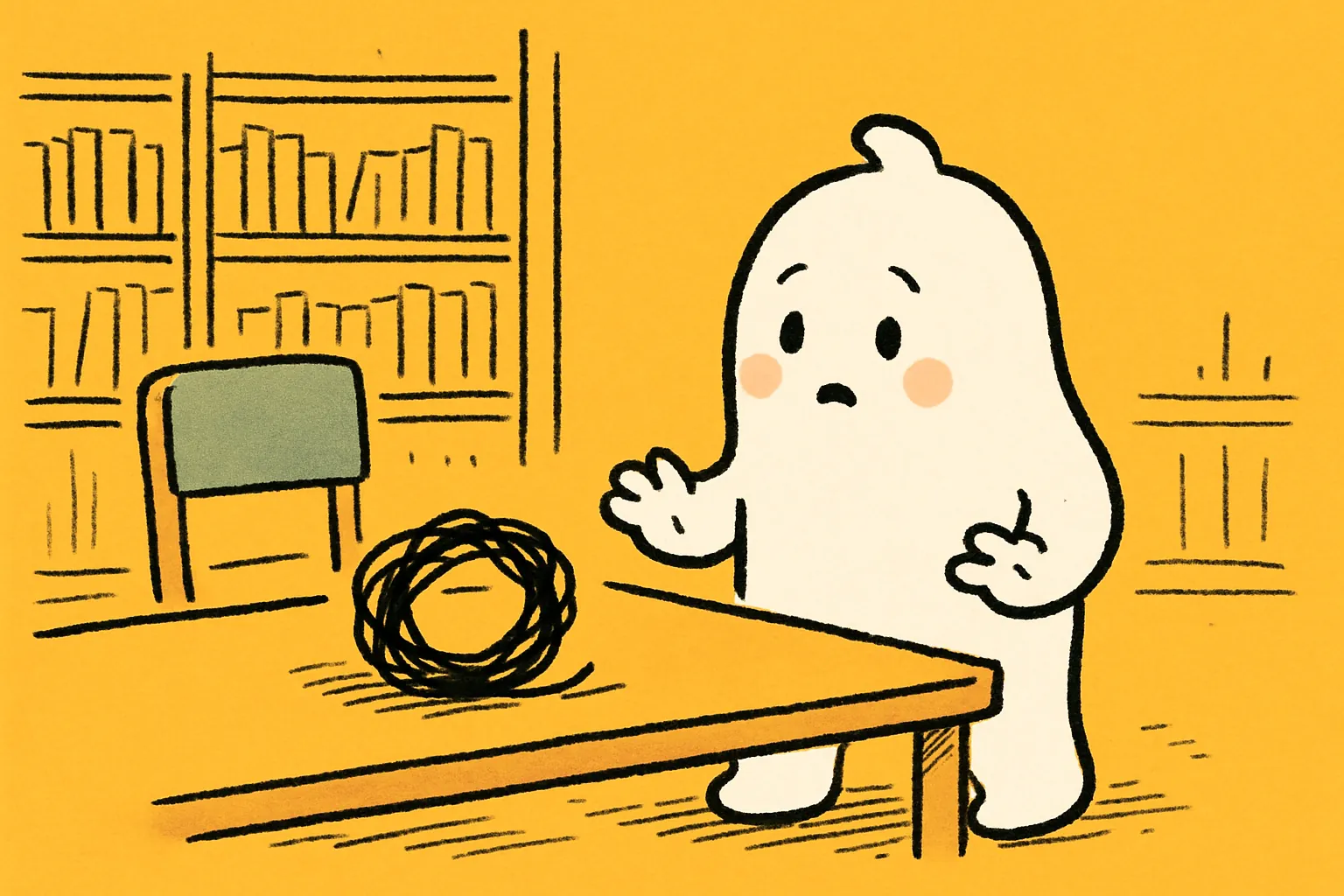
OCD rumination is a mental compulsion: reviewing, analyzing, arguing and problem-solving to settle a sticky thought. You stop it the way you stop any compulsion, by catching it early, naming it as rumination, and leaving the question unanswered. Don't push the thought away and don't answer it. Let the discomfort rise and pass while you go back to what you were doing.
What is OCD rumination?
It’s the compulsion that doesn’t look like one. Nothing moves. Your hands stay still, nobody sees a thing, and from the outside you’re a person staring at a wall or a spreadsheet. Inside, you’re working hard: reviewing what happened, analyzing what a feeling meant, arguing with the thought, running the scenario one more time to see whether it holds up.
That’s rumination, and in OCD terms it’s a mental compulsion. It does what a physical ritual does. It’s an attempt to settle something that can’t be settled, and each round teaches your brain that the question was worth settling. What turns a normal intrusion into an obsession is the meaning you give it and what you do about it, not the content of the thought.
It wears a different costume in every theme:
- Harm: “would I actually, what does it mean that the image came at all”
- Relationship: holding today’s feelings up against last year’s to work out if it’s real
- Real event: replaying one conversation, sentence by sentence, for the hundredth time
- Contamination: mentally tracing where your hands have been to decide whether it counts
- Identity themes: checking for a reaction, then analyzing the reaction you found
Different content. Same engine.
Is OCD rumination the same as overthinking?
Overthinking is a broad, friendly word for a lot of things. Rumination in OCD is narrower and more specific: it has a target, and the target is certainty.
Everyday worry tends to wander around real-life problems, money, work, a deadline. OCD rumination tends to circle one unacceptable question and demand a verdict. Obsessions and worries differ in both form and content, with worries centered on ordinary concerns and obsessions arriving as intrusions you’d rather not have had.
The giveaway is the goal. If you’re trying to reach a state of knowing for sure, you’re ruminating. Needing to know for sure is a core feature of OCD, and rumination is how that need gets acted out when there’s nothing to touch or check. If you’re unsure whether your loops are OCD or general anxiety, it’s worth reading our piece on telling OCD and anxiety apart.
What’s the difference between an intrusive thought and rumination?
The intrusive thought is the arrival. Rumination is what you do next.
The arrival isn’t your choice and it isn’t rare. Most people without OCD report thoughts with the same content as clinical obsessions, the violent ones, the sexual ones, the blasphemous ones, the “what if I actually want this” ones. If that surprises you, we’ve written more about why intrusive thoughts are normal.
Rumination is the part with a handle on it. Not an easy handle, and not one you can grab in the first half-second, but a handle. That’s genuinely good news, because it means there’s something to practice. You don’t have to stop the thoughts. You only have to stop answering them.
Why does rumination feel like thinking, not a compulsion?
Because it uses the same equipment. Washing feels like washing. Reviewing feels like being responsible, thorough, honest with yourself. It feels like the one thing standing between you and a terrible mistake.
It also makes the fear look more solid as you go. Vividly imagining an event raises your confidence that it really happened, which is why replaying a scene for an hour leaves it feeling closer to fact than it did when you started. That’s mental review doing the opposite of what you hired it for, and it’s part of why OCD feels so real.
Mental checking erodes confidence too. Checking again and again makes you less sure, not more, because repeated checking degrades your trust in your own memory. Ten passes over a memory doesn’t sharpen it. It blurs it, and then the blur becomes the next thing you have to resolve.
And the obvious alternative, shoving the thought out, doesn’t work either. Trying to push an intrusive thought away brings it back more often. Pooled across controlled studies, suppression doesn’t reduce a thought and it can rebound. So you can’t win it by thinking and you can’t win it by not thinking. What’s left is leaving it be.
How do you catch yourself mid-ruminating?
You can’t stop what you haven’t noticed, and rumination is quiet. These are the usual tells:

- Time has gone missing. You’ve reread the same paragraph four times.
- The same sentence is circling, slightly reworded each lap.
- Your body is braced: jaw, shoulders, breath high in the chest.
- There’s a felt question underneath it, usually “did I”, “would I”, or “what if I”.
- You’re building a case, for the prosecution or the defense.
One question sorts it quickly: am I trying to settle something? If the answer is yes, it’s a compulsion, no matter how reasonable the sentences sound.
How to stop OCD rumination, step by step
None of these steps get rid of the thought or the doubt. That’s not a design flaw, it’s the point.

- Catch it early. The first lap is the cheapest one to leave. Use the tells above and treat noticing as the win, even if you notice forty minutes in.
- Name what it is, not what it’s about. “This is rumination.” Not “this is an important question I should be responsible about.” Naming the behavior puts you a step outside it.
- Stop mid-sentence. You don’t have to finish the thought first. Leave it hanging, deliberately, half-built. That’s the response prevention.
- Don’t swap it for suppression. Pushing the thought out is just the same compulsion running backward. Let the thought sit there, unedited, as loud as it likes.
- Let the anxiety come up. There’ll be a surge when you stop answering, and it peaks and eases on its own if you don’t scramble. If it helps to have something to hold onto mid-moment, you can ride the free wave.
- Hand the question back unanswered. “Maybe, maybe not.” Not as a clever trick to feel better, as the honest state of things. Certainty isn’t on the menu today.
- Go back to your life with the thought still running. Something that needs your hands or your attention is ideal. The thought is allowed to come along. That’s the exposure.
- Expect it back in ninety seconds. It’ll re-approach. Each re-approach is another rep, not evidence you failed the last one.
And don’t take the side door. Confessing the thought, or asking someone whether it means anything, is rumination outsourced, which is why stopping reassurance-seeking belongs in the same plan.
What do you do with the unresolved question?
You leave it. Not resolved, not dismissed, not filed under “just a thought”. Open.
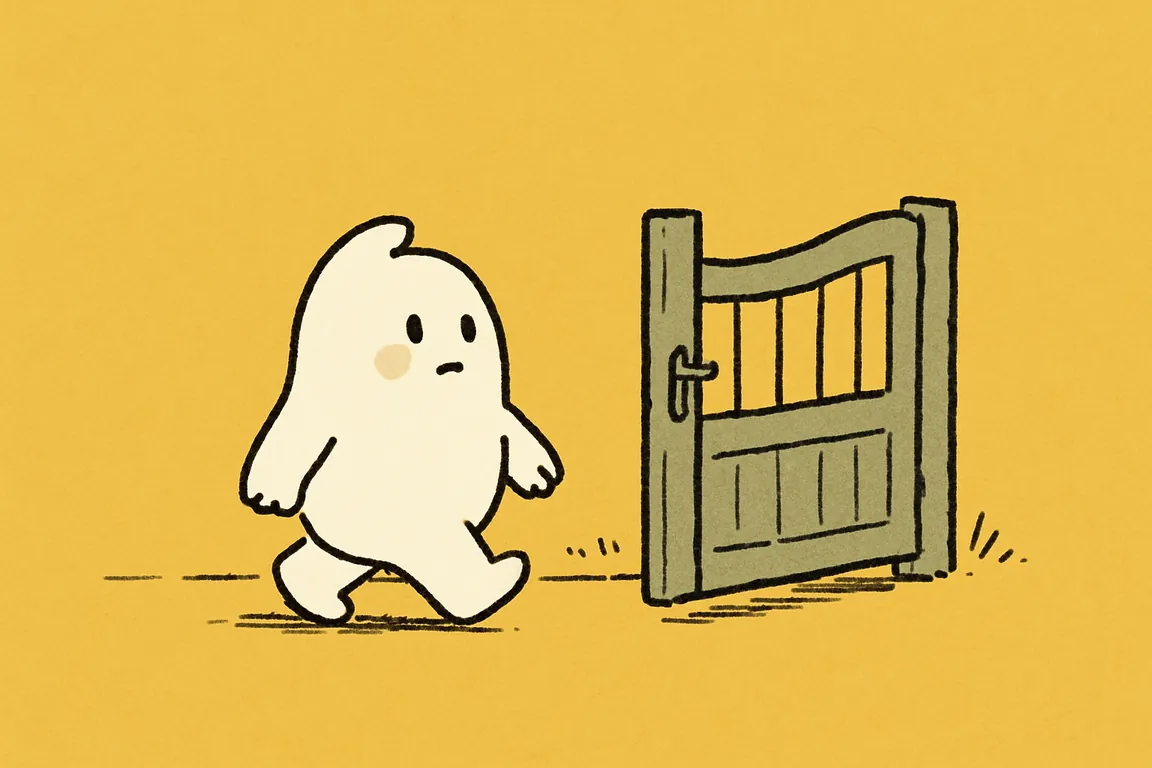
That’s the hardest sentence in this article, and it’s also where the change happens. Each time you face the trigger and skip the ritual, you build new learning that competes with the old alarm, and being surprised by what happens matters more than waiting for the anxiety to drop. What surprises the system is that you went to sleep, went to work, stayed a decent person, without ever getting the answer.
Half measures don’t get you there. Exposure works better when rituals are stopped fully rather than cut down, and “I’ll just check this one thing quickly” is a full ritual in a small coat. If mental review is glued to something that actually happened, real event OCD and unresolvable guilt is the closer read.
When rumination needs more than a mid-moment skill
Catching loops is the emergency skill. The treatment is exposure and response prevention, the same move done on purpose, planned, repeated, until the alarm updates. For mental compulsions that means deliberately bringing the thought up and declining to answer it, which is awkward to invent alone but very doable with structure: see how to do ERP at home and what the evidence actually shows. Surf AI can sit with you through the response-prevention part when you’re mid-loop at 1am, which is often when OCD gets loudest.
If the rumination has turned to thoughts of ending your life, that isn’t something to surf alone, and Surf OCD isn’t a crisis service. Please find a helpline in your country and talk to a person today.
 Straight answers
Is OCD rumination a compulsion or an obsession?
It's a compulsion. The obsession is the sticky thought that arrives uninvited; rumination is the mental work you do afterward to settle it, by reviewing, analyzing, arguing or problem-solving. It feels like thinking because it uses the same machinery, but it functions exactly like checking or washing: short relief, then the doubt returns louder.
How long does it take to stop ruminating?
Individual loops usually shorten within minutes once you stop feeding them, though the urge will re-approach many times that first day. The habit itself takes weeks of repetition to loosen, not days. Progress looks like catching yourself earlier and leaving the question open faster, not like the thoughts stopping altogether.
What if the thing I'm ruminating about is a real problem?
Real problems get one round of thinking and then an action or a decision. Rumination has no exit: you reach a conclusion, feel two minutes of relief, then reopen the case. If you've thought about it more than once and nothing changes except your anxiety, you're doing the compulsion, not the problem-solving.
Is distracting myself from rumination avoidance?
It depends on the purpose. Going back to a task while the thought is still there, still uncomfortable, is good practice. Frantically filling every second so you never have to feel the doubt is avoidance, and avoidance keeps the loop alive. The test is whether you're willing to let the thought stay, or trying to make it leave.
Can rumination happen without a clear intrusive thought?
Yes. Some loops start from a feeling, a vague sense of wrongness, or an unexplained physical sensation, and the question gets built afterward. The behavior is the same: analyzing to reach certainty. You treat it the same way too, by naming it, stopping mid-sentence, and letting the uneasiness sit there unresolved.
 Keep reading
Written by Edwin Simonds and checked against every source cited above. Not medical advice.