When helping makes OCD worse: family accommodation explained
 The short answer
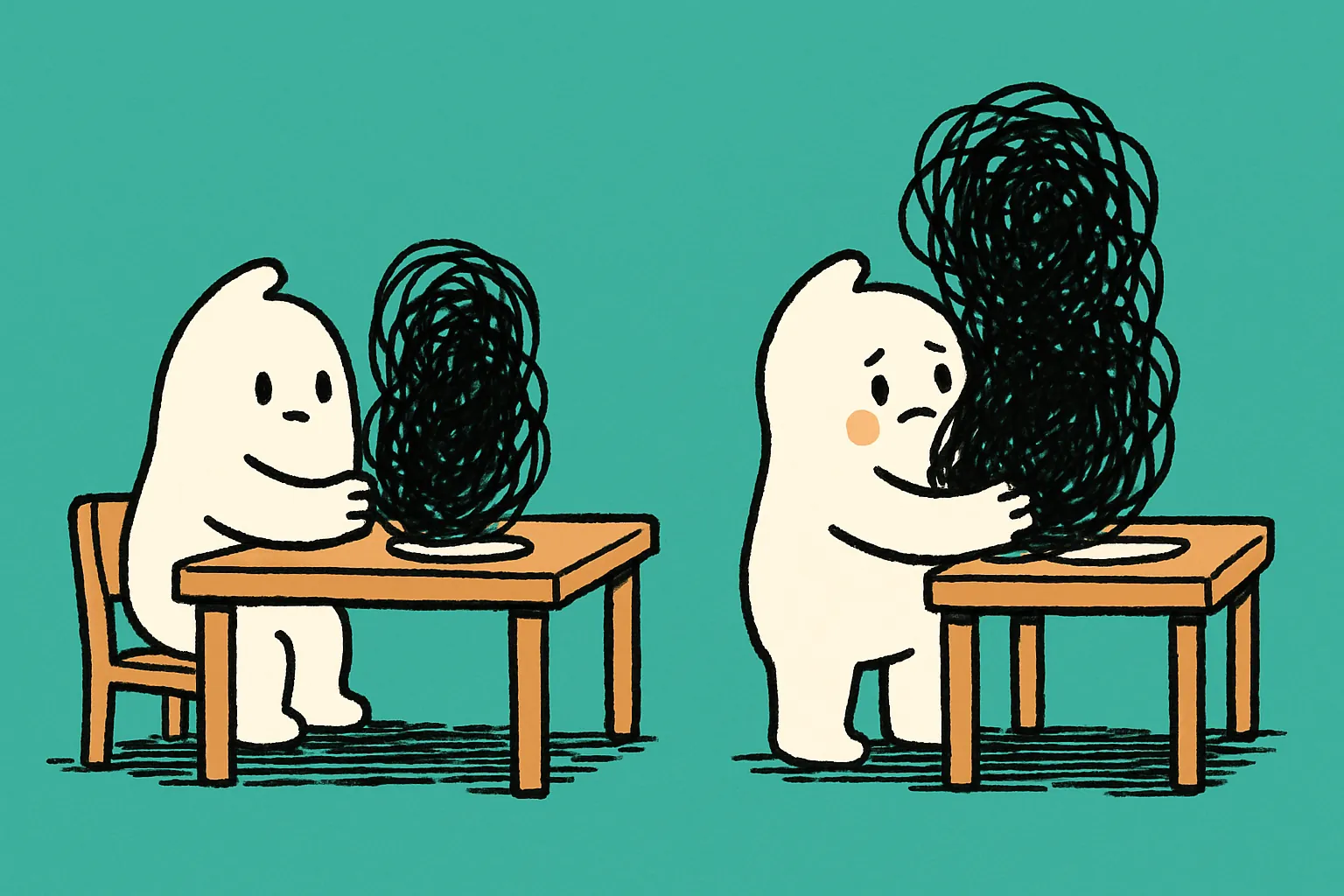
Family accommodation is anything you do to reduce someone's OCD distress: answering reassurance questions, checking for them, taking over tasks, changing routines, avoiding their triggers. It's loving, and it works for a few minutes. Then it teaches the loop that the fear was real and the ritual was necessary. Stepping back works best when it's planned together, gradual, and paired with warmth rather than withdrawal.
What is family accommodation in OCD?
Family accommodation is the name researchers give to everything the people around someone with OCD do to keep the OCD quiet. It isn’t a character flaw and it isn’t weakness. It’s what caring people do when someone they love is in visible distress.
It usually looks like this:
- answering the same question again, and then again, in slightly different words
- checking something on their behalf, or confirming that you checked
- taking over a task they can’t face, or doing it their way to avoid a spike
- changing routines, routes, schedules or who comes to the house
- not saying certain words, not mentioning certain topics
- waiting. Just waiting, while a ritual finishes, so the day can carry on
It’s close to universal. Surveys of relatives living with someone with OCD find that most of them accommodate in some way, often daily.
Why is accommodation so easy to fall into?
Because it works, for about ninety seconds.
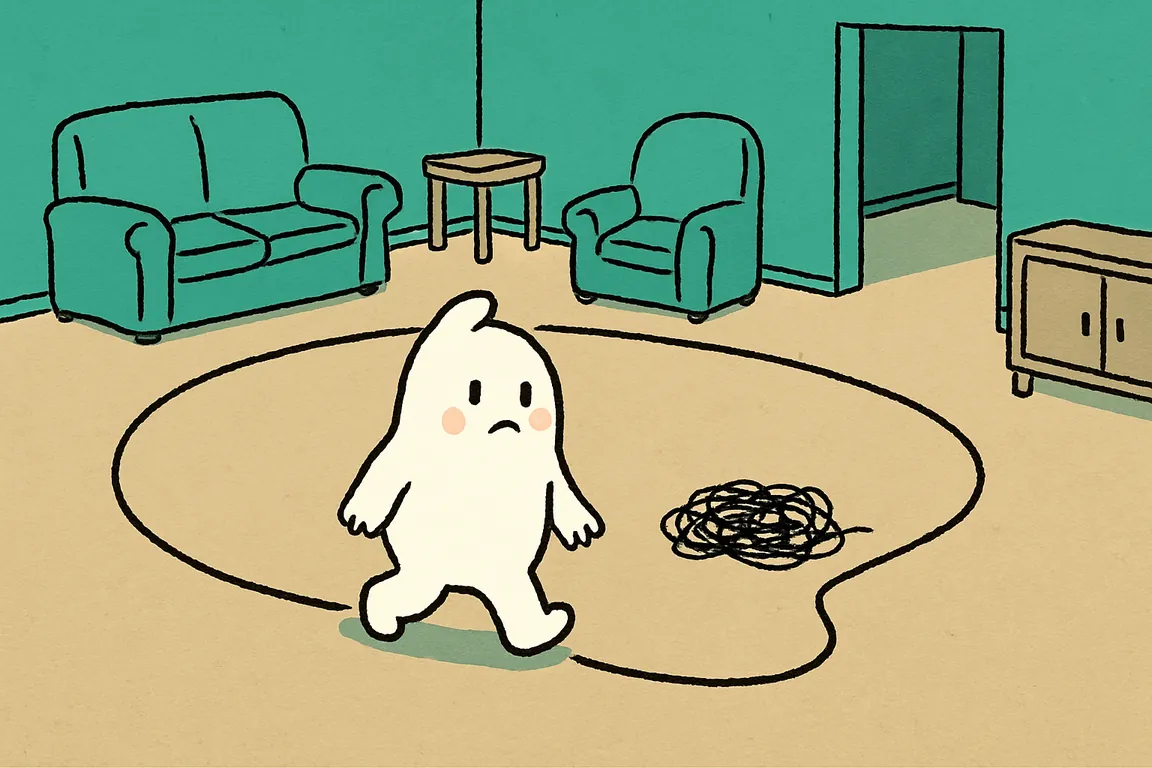
You answer the question, their shoulders drop, the room gets breathable again, and everyone gets to eat dinner. Nobody chooses accommodation at the start. It accumulates. One answer becomes a rule, one detour becomes the only route, and a year later the household is organized around a fear nobody has said out loud in months.
There’s also something quietly specific happening. People ask for reassurance not only to feel certain, but to hand the responsibility to somebody else. When you answer, you take the weight. That’s genuinely kind. It’s also why the weight keeps coming back to you.
Why does helping make OCD worse?
OCD isn’t maintained by the thought. What keeps an intrusion turning into an obsession is the meaning attached to it and what gets done about it. Accommodation is the doing. It just happens to be outsourced to you.
Three things follow.
First, relief teaches. Every time a spike ends because you answered, the brain files it: that was a real emergency, and the answer is what saved us. Next time the spike arrives faster.
Second, the answers stop working. Reassurance behaves exactly like checking. People with OCD seek it more often, from more people, and are less satisfied with what they get. You’ll notice this yourself: the question gets more precise, the wording gets tested, “but you said it in a weird voice.”
Third, checking corrodes the thing it’s supposed to protect. Repeated checking makes people trust their memory of what they checked less, not more. When you check for them, you’ve added a second memory to doubt.
And across studies, higher family accommodation tends to go with more severe OCD symptoms and poorer response to treatment. That’s an association, not a verdict on you. But it’s why therapists ask about it in the first session.
What does accommodation look like across different themes?
The theme changes the costume. The mechanism is identical.
- Contamination: doing the laundry their way, changing clothes at the door, becoming the designated toucher of things.
- Harm: being asked to confirm nothing happened on the drive, or being asked to hold the knives, or being asked “you’d tell me, wouldn’t you.”
- Relationship: being asked to rate the relationship, or being asked to say the words back in exactly the right order.
- Checking: going back with them, or going instead of them.
- Pure O and religious or moral themes: confessions you’re asked to hear and absolve, sometimes several times a night.
- Just right themes: repeating a phrase, redoing a task, letting them redo yours.
If you’re in the harm or moral corner of this, why OCD feels so real is worth reading together. The conviction is part of the disorder, not evidence about the person.
How to step back from accommodation, together
Doing this suddenly and alone tends to blow up. Doing it as a shared plan tends to work. Including family members in psychological treatment for OCD improves outcomes compared with treatment that leaves them out.

- Make a list, calmly, on a good day. Write down every accommodation you can spot, big and small. Not in the middle of a spike. Not as an accusation. Just a list.
- Rank them. Easiest to hardest, from their point of view, not yours. The 2am confession may be the hardest thing on the page even though it takes thirty seconds.
- Pick one, and agree the wording in advance. Decide together what you’ll say instead. Something like: “We agreed I’d stop answering that one. I’m staying right here with you.” Agreeing it beforehand means you’re not improvising at the worst moment.
- Change what you do, not how much you care. Stepping back from a ritual isn’t stepping back from the person. Stay in the room. Keep your voice warm. This is the whole difference between response prevention and abandonment.
- Expect the pushback, and don’t renegotiate mid-spike. The urge will get louder before it settles. If you cave at minute forty, the lesson learned is that forty minutes of pressure works.
- Go fully on the one you’ve chosen, rather than half-way on everything. Where it’s been tested, exposure works better when rituals are stopped rather than trimmed down. A partly answered question is still an answered question.
- Add the next one when the first has settled. Usually a week or two. Then repeat. Varying the situations and dropping the safety behaviors is what makes new learning stick across contexts.
- Give them something to do with the wave. Not a distraction, a place to put it. Surf OCD’s free urge-surfing wave is one option, breathing out slowly and staying put is another.
If you want scripts rather than principles, what to say to someone with OCD and helping someone with OCD without reassuring them go line by line.
Will stepping back make things worse?
Short term, often yes. Anxiety goes up when the relief is removed. That’s the mechanism working, not the plan failing, and it’s the same discomfort anyone meets in ERP that gets harder before it gets easier.
Long term, maybe, maybe not, and we won’t pretend otherwise. What we can say is that the widespread fear that exposure-based work damages people isn’t supported by the outcome evidence, and that across ERP trials the main way it fails is people dropping out, not people being harmed. Which is an argument for going gradually with somebody alongside you, not for going gently forever.
One honest warning: the temptation is to give one last answer, to settle things before the plan starts. That answer is the one OCD will remember. There’s more on the other side of that in how to stop asking for reassurance, which is worth reading by both of you.
How do you look after yourself while you do this?
Carers rarely get asked this. Relatives of people with OCD report high levels of distress, and the more they accommodate, the more distressed they tend to be. Resentment is not a sign you’ve stopped loving someone. It’s a sign the arrangement has been costing you something.

A few things help. Keep one part of your week that OCD doesn’t get a vote in. Tell one other adult what’s actually going on at home. Decide in advance what you will and won’t do, so you’re following a plan instead of judging each request on the spot at midnight.
And get a specialist involved if you possibly can. ERP within CBT is the recommended first psychological treatment for OCD, and the family side of it is a standard part of the work rather than an add-on. If a therapist isn’t reachable, the evidence for guided ERP at home is worth reading before you improvise.
If either of you is having thoughts of ending your life, please don’t hold that alone. Surf OCD isn’t a crisis service. You can find a helpline in your country and speak to someone today.
 Straight answers
Am I enabling my partner's OCD?
If you're regularly answering reassurance questions, checking for them, or reshaping your routine around their fears, that's family accommodation, and yes, it feeds the loop. It's also the most natural response in the world to watching someone you love suffer. The useful question isn't whether you've been enabling it, it's which single accommodation the two of you could plan to drop first.
What if they get angry when I stop accommodating?
Expect it. Removing relief raises anxiety, and anxiety often comes out as anger, pleading or bargaining. This is why the plan gets agreed on a calm day, in advance, with the exact wording decided. Mid-spike is the worst possible moment to renegotiate. Stay warm, stay in the room, hold the agreement, and talk about it afterward rather than during.
Is refusing to answer the same as being cold?
No, and the difference is what you do with your body and your tone. Cold is leaving the room, sighing, or making them feel punished. Response prevention is sitting beside them, saying you're not going to answer that one because you both agreed, and staying there while it passes. You're declining the ritual, not the person.
How long before things settle after we cut accommodation?
There's no fixed timeline, and anyone promising one is guessing. Most families notice the specific request getting less frequent and less charged within a couple of weeks, if nobody caves in between. Progress usually looks like fewer questions rather than a calm household overnight. Adding one accommodation at a time makes it easier to see what's actually shifting.
Should the whole family stop at once, or just me?
Ideally everyone, on the same terms. OCD is very good at finding whoever will still answer, including children, grandparents and friends. If one person holds the line and another doesn't, the requests simply migrate. Agree the wording as a household, write it down if that helps, and make sure nobody is left to be the only one saying no.
 Keep reading
Written by Edwin Simonds and checked against every source cited above. Not medical advice.