Checking OCD: how to stop checking locks, stoves and messages
 The short answer
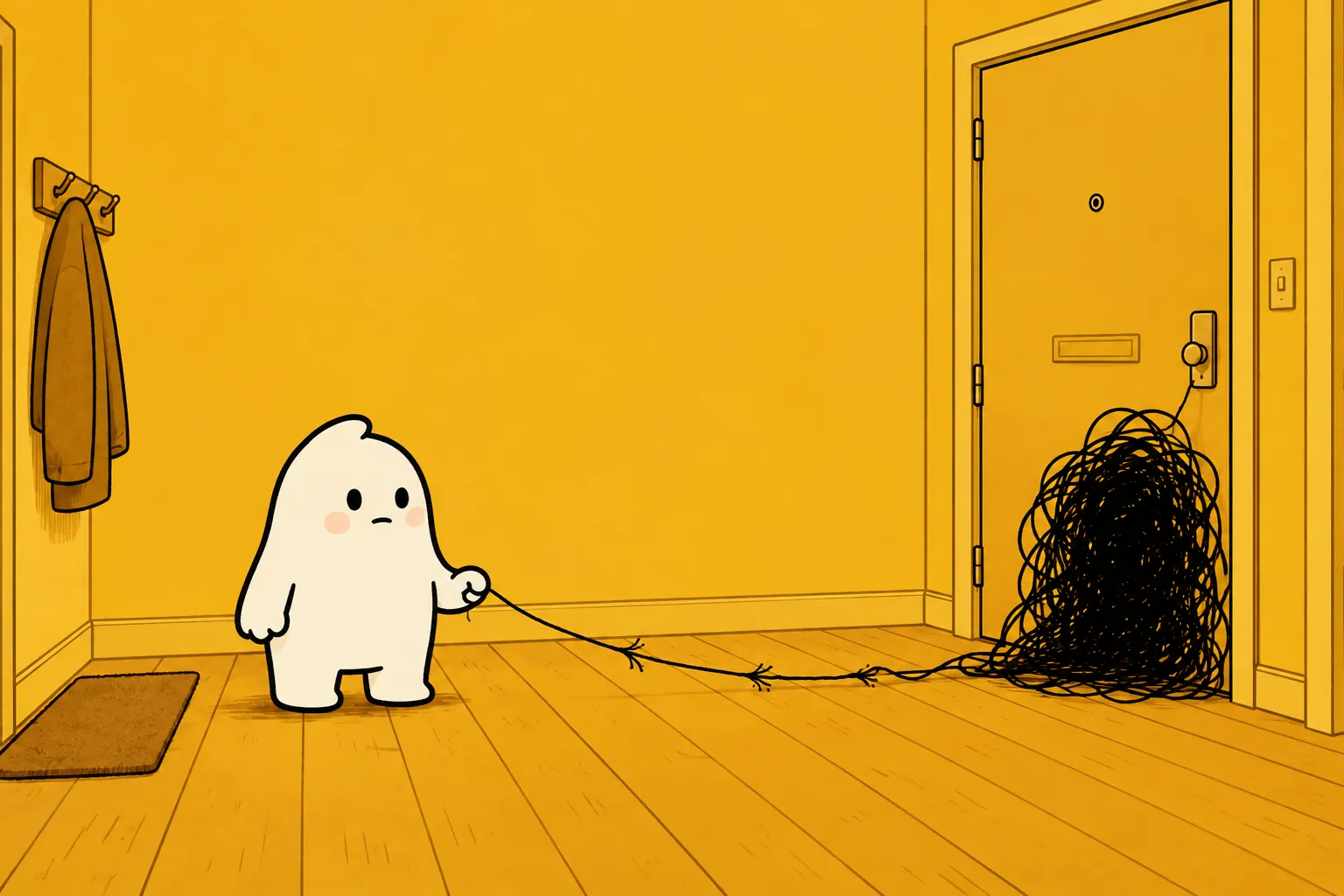
Checking OCD is repeating a check on a lock, stove, appliance, message, your body or your own memory to feel sure something bad hasn't happened or won't, when one check no longer settles it. Rechecking lowers your confidence in your memory rather than raising it. To stop, set a rule in advance, allow one ordinary check or none, use no photos or other people as stand-ins, and let the doubt stay.
What is checking OCD?
Checking OCD is repeating a check on a lock, a stove, an appliance, a sent message, your body or your own memory, to feel sure that something bad hasn’t happened or won’t happen, when one check no longer settles the question.
Everyone checks things. Pulling the handle once on the way out is ordinary. What makes it OCD is the loop that follows: a doubt arrives, the check is supposed to end it, and within seconds or minutes the doubt is back, often sharper and more specific. So you check again.
Needing to know for sure is a core feature of OCD. The check isn’t really about the lock. It’s an attempt to get certainty, and certainty isn’t available.
What do people with OCD check?
Almost anything that could tie you to harm or to a mistake. The common ones are:
- doors, windows, locks, car doors
- stoves, ovens, heaters, irons, hair straighteners
- faucets, plugs, outlets, chargers
- sent emails and texts, reread for tone or for a word that could be taken the wrong way
- the road or the car after driving
- the body, for a sensation or a sign
- bank transfers, forms, work you’ve already submitted
- your own memory of what you did or said
- searching online for the same question in slightly different words
- asking someone else to look, to confirm, or to walk out with you
Mental checking counts too. Replaying the moment you turned the dial, picturing the handle in your hand, running a conversation back to see whether you said the wrong thing: that’s a compulsion done in your head, and it keeps the loop going just like the physical one. Mental compulsions can be targeted in ERP in the same way.
Why does checking make the doubt stronger?
Because repeated checking lowers your confidence in your own memory instead of raising it. When people repeatedly checked a simulated gas stove, their memory stayed accurate, but they trusted it less and found it less vivid and less detailed. Accuracy held. Certainty went down.
That’s why the tenth check feels worse than the first. The more times you do something, the more the memory of doing it blurs into all the other times, so the picture in your head stops feeling convincing, and the only thing you can think of to fix that is another look.
The short relief after a check also teaches your brain that the check was necessary, so the next doubt arrives with more urgency. Getting someone else to check works the same way: people with OCD ask more often, of more people, and are less satisfied by the answer. If asking is your main check, stopping reassurance-seeking is part of the same practice.
Why does a check never feel finished?
Because the check is aimed at a feeling rather than at information, and that feeling doesn’t arrive on command. OCD wants “sure enough” or “just right”, and your eyes can only give you what’s in front of them. Doubt about your own actions and fear of making a mistake run high in OCD, so the evidence never matches the standard.
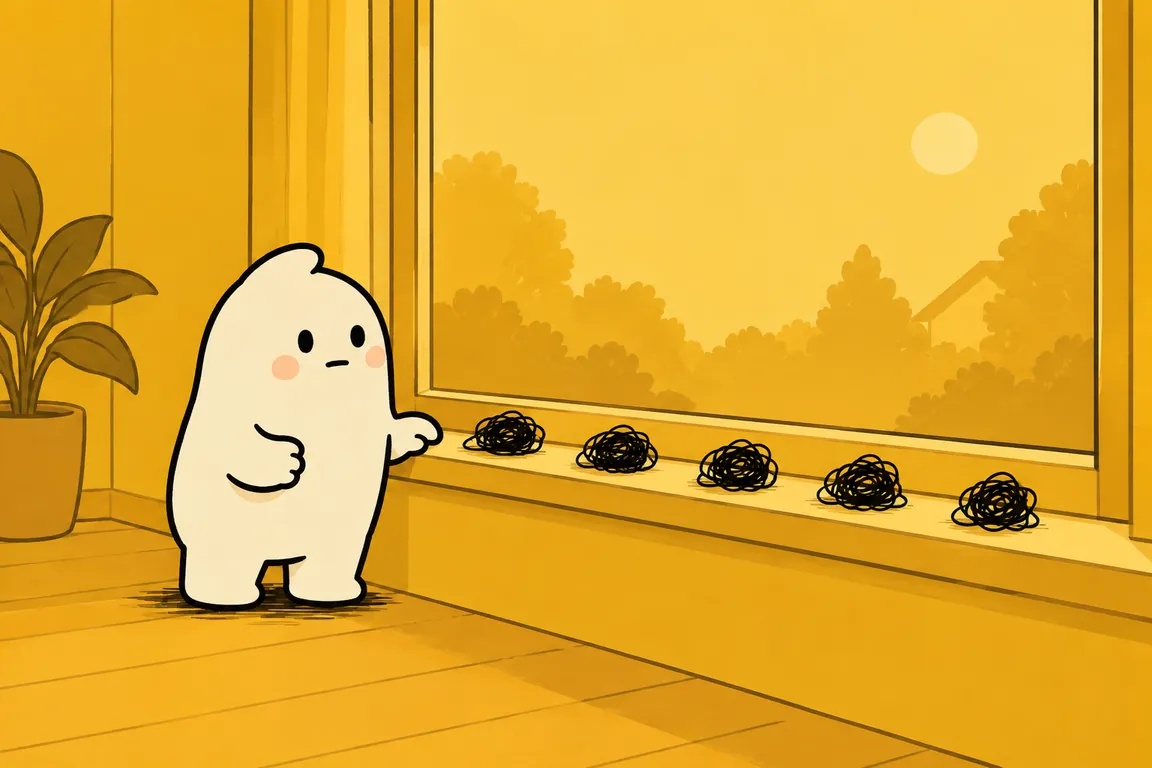
Then the rules grow. Check three times. Check in a set order. Say “off” out loud. Photograph the dial. Film the hallway. Get back out of the car. Each new rule works briefly, and then it becomes one more thing that has to be done before you’re allowed to leave.
The honest sentence is “maybe, maybe not”. No check can deliver better than that, which is why no check ever feels finished.
Is this an ordinary check or a compulsion?
An ordinary check is one look, done once, that ends the matter whether or not you feel certain afterward. A compulsion is a check you repeat, extend, or redo in your head until a feeling tells you to stop.
Some questions that help, without anyone deciding for you whether your particular fear is realistic:
- Do you repeat it, or redo it mentally after you’ve walked away?
- Is the stopping rule a feeling rather than a fact?
- Do you use stand-ins: photos, video, a partner, a second person’s eyes?
- Does it cost you time, make you late, or make you avoid being last out?
- Does the doubt come back within minutes of finishing?
If a check involves a real-world safety or medical risk you can’t judge alone, such as a prescribed medical check or equipment you’ve been told to monitor, get a clinician or a qualified person to set the rule with you. Then follow the rule, not the feeling.
How to stop checking with ERP
You stop checking by deciding the rule for each check in advance, dropping to one ordinary check or none, and letting the doubt stay without resolving it. That’s exposure and response prevention, the first psychological treatment recommended for OCD in UK guidelines, and you can read the evidence behind it in full.

- Count your checks for a week. Write down what you check, how many times, and who else gets pulled in. Include the mental ones and the online ones. Most people underestimate before they count.
- Pick one check to start with. Not the hardest one. Something you do daily and could do differently tomorrow.
- Set the rule while you’re calm. “One look at the lock, then walk” or “no check at all”. Written down, decided before the moment, not negotiated at the door.
- Delay before going back. If you can’t skip the recheck yet, postpone it: two minutes, then ten, then “not before I reach the bus stop”. The urge may get stronger while you wait, and you can ride the free wave during the delay.
- Stop the extra checks completely. Exposure works better when the ritual is stopped completely than when it’s only reduced. Three checks instead of nine is a step on the way, not the finish.
- Use no stand-ins. No photographs, no video, no asking a partner to confirm, no special way of touching the handle. A substitute check is still a check.
- Don’t replay it afterward. Mental review is the compulsion continuing in your head. Imagining an event in detail raises your confidence that it happened, so replaying the morning doesn’t settle anything, it just makes both versions feel vivid.
- Carry on with the doubt in place. Start the meeting, make the call, let “maybe I left it on” sit there while you do other things. New learning builds when you find out what happens without the ritual, and being surprised matters more than waiting for the anxiety to drop. It may not drop today. The practice still counts.
A short ladder might run like this: leave with one check and no photo; leave with one check and don’t return within ten minutes; leave while a doubt is active; be the last one out; leave with no check at all on a rushed morning. Repeat each rung in different moods and at different times before moving up. There’s a fuller worked ladder here, and a guide to running ERP yourself at home. Surf OCD is one place to keep the ladder and the log, and to ride out the urge to go back.
What if you’ve already gone back to check?
Redo the exposure as soon as you can. One recheck doesn’t cancel the rungs you’ve climbed, and punishing yourself about it is just another compulsion, as are confessing it and promising never to do it again.

Walk back out without checking, or leave again and keep going. If you’re still shaky, sitting with the spike is the skill, and resisting the next compulsion is where the next learning comes from. The next urge counts more than the last one.
How can family stop checking on someone’s behalf?
By agreeing in advance to stop doing the check or answering the “did I” question, and saying out loud what they’ll do instead. Higher family accommodation goes with more severe OCD and poorer treatment response, and involving family in treatment improves outcomes compared with leaving them out.
A plain script helps more than an argument: “I’m not going to check the stove, because we agreed that it keeps the loop going. I know this is hard and I’m staying here with you.” What to avoid is the version that sounds kind and functions as a check: “It’s fine, I saw it was off.”
Do it together, in advance, one check at a time, and expect the urge to get stronger before the new pattern settles. There’s more on where helping turns into accommodation. A therapist trained in ERP can help you plan all of this, and is worth looking for if you can get one.
 Straight answers
Why do I keep checking things when I know I already checked?
Because checking is aimed at a feeling of certainty, and knowing isn't the same as feeling sure. Repeated checking also makes the memory of the check less vivid and less detailed, so it stops feeling trustworthy. The more you check, the less convincing your own memory becomes, which is exactly what pulls you back for another look.
Is it OK to photograph the stove so I don't have to check?
No, not as a way to stop checking. A photo is a stand-in check. It gives the same short relief, keeps the same loop running, and OCD will soon doubt the photo, the timestamp, or what happened after it was taken. The target in ERP is leaving without proof and letting the doubt stay unresolved.
How many times is it normal to check the door?
No number settles it, and looking for the right number is part of the loop. ERP sets a rule instead: one ordinary look, done with attention, then walk away whether or not you feel sure. For some checks the rule is none at all. You decide the rule in advance, not in the moment.
What if the thing I'm checking is a genuine safety risk?
Then get the rule from someone qualified rather than from your anxiety. For things with real risk, such as a prescribed medical check or equipment you've been told to monitor, ask a clinician or a qualified person what a reasonable check is and how often. Then follow that rule exactly, including the part where it tells you to stop.
Can checking OCD go away?
Checking can become much less frequent and much less demanding, though nobody honest will promise it's gone for good. OCD tends to come and go over the years. What ERP works on is how you respond: fewer checks and less of your day spent on them. The doubt may still show up. The practice is not answering it.
 Keep reading
Written by Edwin Simonds and checked against every source cited above. Not medical advice.