Real event OCD: when the guilt won't resolve
 The short answer
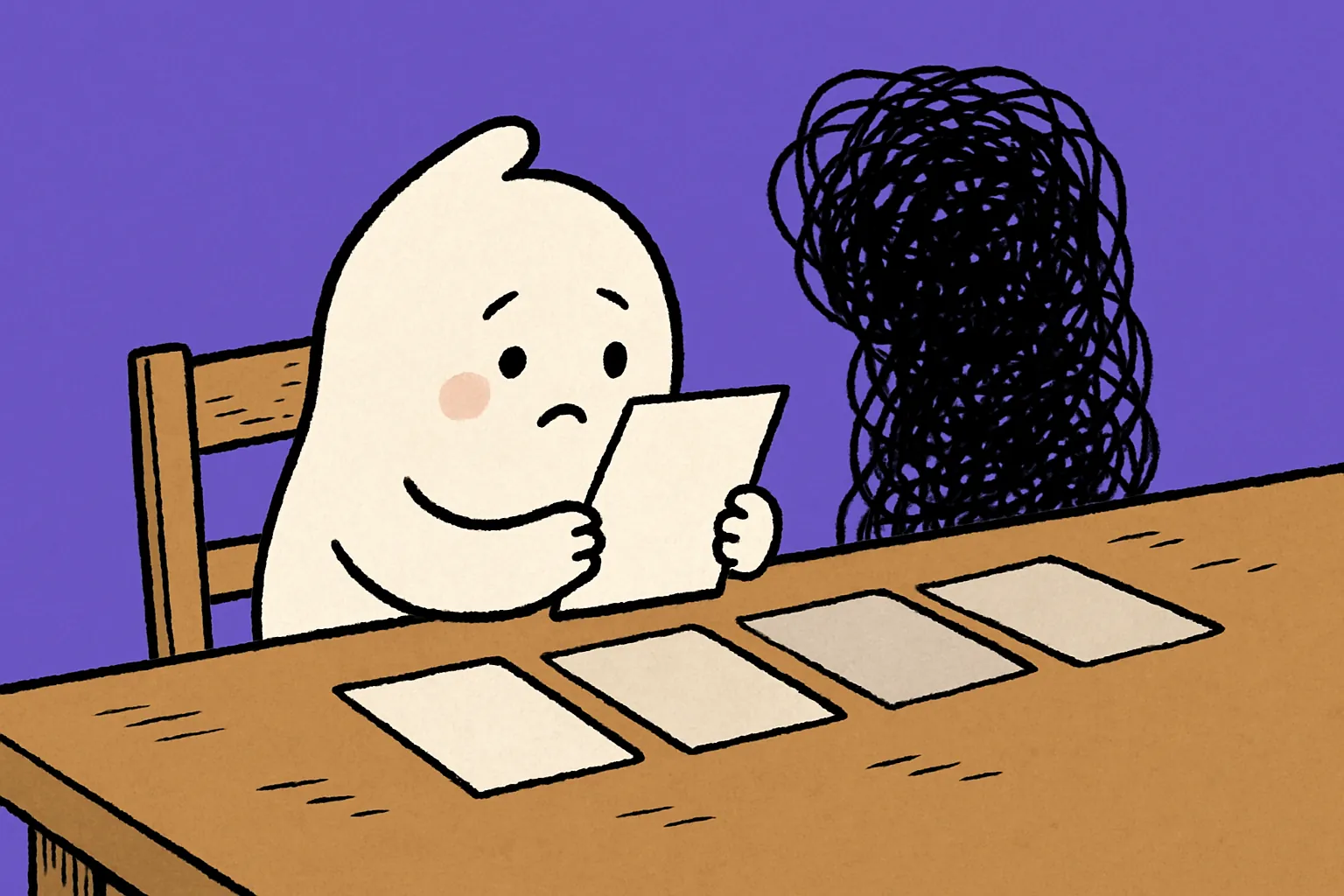
Real event OCD is the loop that latches onto something that actually happened. The memory is real; what OCD adds is the demand to know exactly how bad it was and what it means about you. Reviewing can't deliver that, because each replay makes the memory blurrier and the doubt louder. ERP means facing the memory and the not-knowing without reviewing, confessing or seeking a verdict.
What is real event OCD?
Real event OCD is the name people use when the loop fastens onto something that actually happened. Not “what if I did”, but “I did, and I can’t put it down”. The memory is real, or partly real. What OCD adds is a demand: know exactly what happened, know exactly how bad it was, know what it means about you, and know it now.
The phrasings are pretty consistent. “I keep replaying a conversation from six years ago.” “I need to remember the exact words I used.” “I think I crossed a line and I can’t tell.” “I have to confess or I’ll never sleep.” “Am I a bad person?”
The content varies by theme and the machine doesn’t. Someone goes back over a drive from last winter for signs they felt a bump. Someone re-reads old messages hunting for the tone they used. Someone tries to reconstruct a night out and work out who was too drunk. Someone adds up how they treated a parent who has since died. Someone combs an old tax return, or a thing they said to a kid, or a line on a job application.
Real event OCD isn’t a separate diagnosis. It’s a theme, and the theme isn’t the point. What makes it OCD is the meaning you hand the memory and what you do about it, not the memory itself.
Why doesn’t reviewing the memory ever settle it?
Because review is a compulsion, and compulsions manufacture doubt rather than resolving it.
Two things happen when you go back over a memory dozens of times. The first is memory distrust. Repeated checking leaves people less confident in what they checked, not more, and mental review is checking done inside your head. The details go soft. Edges blur. The version you’ve reviewed four hundred times starts to feel less like a memory and more like a photocopy of a photocopy.
The second is worse. Vividly imagining an event increases how confident people are that it really happened. When you spend an evening picturing the worst reading of what you did, you aren’t retrieving, you’re rehearsing. The feared version gets more detailed, easier to picture, more available, and vividness feels like truth. That’s part of why OCD feels so real when nothing about the actual evidence has changed.
So review isn’t neutral investigation. Each pass makes the memory less reliable and the fear more convincing, which is precisely why one more pass always feels necessary.
“Am I a bad person?” and why that question has no exit
We’re not going to hand you a verdict here, in either direction. It wouldn’t hold anyway, and that’s the part worth noticing: OCD isn’t asking a question that answers can close.
Obsessions grow when a thought gets read as a catastrophe about who you are. With a real event the reading has a foothold, because something did happen, so the question feels like it should yield to enough thinking. It doesn’t. Character isn’t a fact you can pull out of a memory, and your intentions from years ago aren’t filed somewhere retrievable in the way OCD insists.
A few familiar patterns do the heavy lifting. Needing to know for sure turns “I can’t be certain” into “I can’t rest”. Over-responsibility turns an ordinary shared human mess into your fault alone. And thought-action fusion, the sense that thinking something counts nearly as much as doing it, means remembering what went through your head at the time can feel like discovering evidence of a crime. Ugly passing thoughts are something everybody has, and knowing that won’t settle this either, because certainty isn’t what’s on offer.
“Maybe, maybe not” is the honest sentence. Maybe you handled it badly. Maybe you didn’t. Learning to stand in that is the work.
Why does confessing make it worse?
Confessing feels different from checking. Functionally it’s the same move. You tell someone the story, watch their face, and collect a verdict. Relief lands, then drains out.

That’s the documented pattern. People with OCD seek reassurance more often, from more people, and end up less satisfied by the answer. And the point of the asking is to feel certain and to hand responsibility to someone else: if they say it was fine, it’s on them now. Which is why it never sticks. Some part of you knows they only heard your telling, and they weren’t there.
Confession also escalates. One telling becomes a fuller telling, then a telling to someone who was actually present, then a request that they confirm details they don’t remember. There’s more on interrupting that habit in how to stop asking for reassurance.
How to do ERP for real event OCD
ERP here has a particular shape. You’re not exposing yourself to a hypothetical, you’re learning to carry a real memory with the verdict left open. Combining real-life exposure with exposure in imagination works better than either alone, and the imaginal side carries most of the load for this theme.
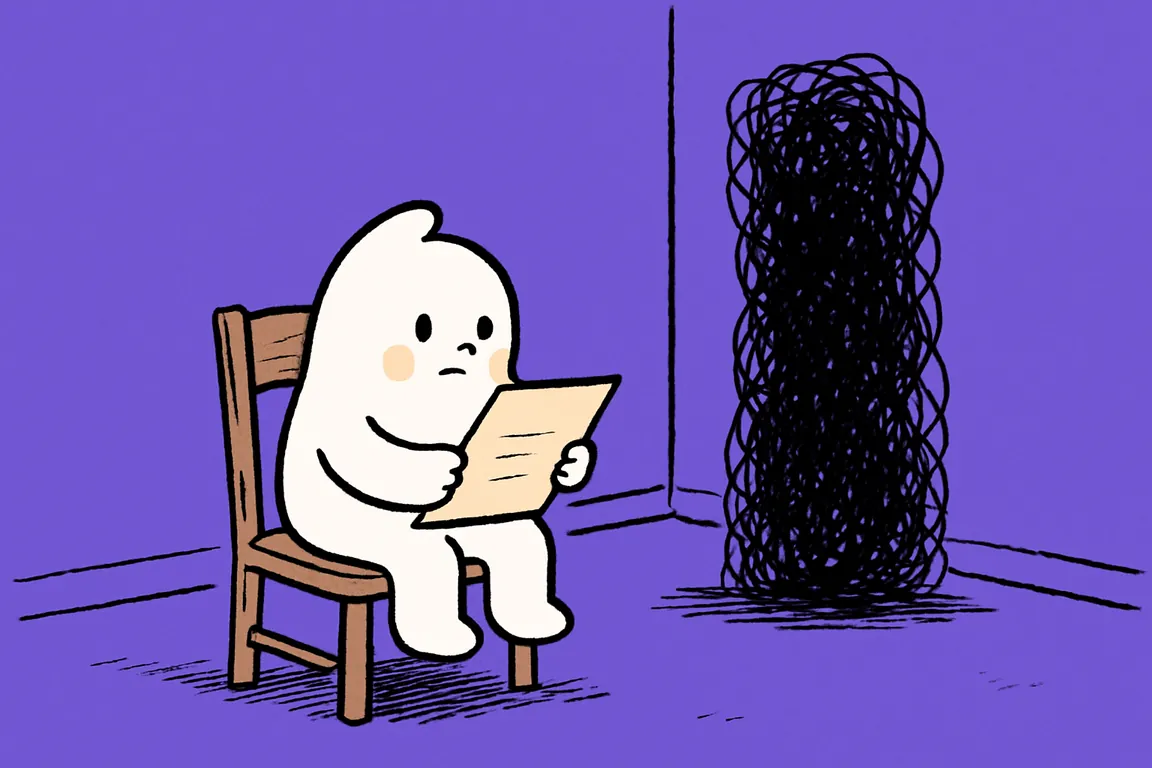
- List the compulsions first. Write down what you actually do: replaying, building timelines, googling, re-reading messages, confessing, apologizing again, scanning your body to see how guilty you feel, avoiding the street or song or person that triggers it. You can’t prevent responses you haven’t named.
- Write a script that includes the unknown. A page, first person, present tense, describing the memory as you fear it was, ending not in resolution but in “maybe it happened that way, maybe it didn’t, and I’ll never know for sure.” OCD wants the script to close with a ruling. Don’t give it one.
- Read it, or record it, and stay. Play it on loop without editing mid-way, without arguing back, without tacking on the comforting line. The aim isn’t calm. The aim is finding out that you can hear the worst version and still be here afterward.
- Prevent the response when the spike comes on its own. Don’t review. Let the urge to replay rise and fall instead, and if it helps mid-moment you can ride the free wave while it does. Every unreviewed spike is a rep.
- Stop the repeat apologies and the confessions. One “no” to the urge, repeated often, does more than any amount of telling. Surf AI can help you spot when a “quick check” is actually round twelve of the same compulsion.
- Vary the practice. Different times of day, different moods, different places, with no safety behaviors smuggled in, including the muttered “but I’d never really do that” at the end. Varying exposures and dropping safety behaviors is what makes the new learning generalize.
- Take the verdict off the table as a goal. Progress isn’t “I finally established that I’m okay”. It’s “the question came, I didn’t answer it, and I got on with my afternoon.”
If you’re building this yourself, how to do ERP at home walks through the ladder, and the evidence behind ERP and its at-home versions is worth reading. A specialist is the better option when you can get one, because real event scripts are easy to turn into covert review without noticing.
What if the thing I did actually was wrong?
Maybe it was. We’re not in a position to tell you otherwise, and neither is anyone who wasn’t there.
Here’s what is useful. Remorse and OCD guilt behave differently. Remorse points outward: it leads to a repair where a repair is possible and wanted, a change in how you act, and then it lets you live. OCD guilt points inward and never closes. It asks the same question at 2am with the same urgency it had five years ago, and no amount of review or self-punishment discharges it. Worth noticing too that apologies made for your own relief can cost the other person something.
If there’s a real amends to make, that’s a conversation to have once, carefully, ideally with a therapist alongside you, rather than something to hand over to the theme that’s been running you into the ground.
Does living with the not-knowing get easier?
It does get easier, though not because the memory changes or because the question finally gets answered. What changes is how much pull the question has. Each exposure builds new learning that competes with the old alarm, and being surprised by what happens matters more than waiting for the anxiety to fall.

Expect the guilt to visit anyway, especially when you’re tired or low, and expect days where it looks solid again. That’s not relapse, it’s a wave, and the way out of a spiral is the same on day one and day three hundred: don’t review, don’t confess, carry the not-knowing into whatever you were doing.
If the guilt has turned into thoughts of ending your life, please don’t sit with that alone tonight. Surf OCD isn’t a crisis service, so find a helpline in your country and talk to a person.
 Straight answers
Is real event OCD actually OCD?
It's a theme, not a separate diagnosis, and the loop is the same OCD loop. The trigger is a memory rather than a random intrusive flash, but the pattern is identical: a sticky doubt, a spike, and compulsions like replaying, confessing and reassurance-seeking that promise resolution and deliver more doubt. Only a clinician can diagnose, and the treatment approach doesn't change.
How do I tell real event OCD from normal guilt?
Look at what the guilt does rather than what it says. Ordinary remorse points outward, leads to a repair or a change in behavior, and then eases off. OCD guilt loops: it demands certainty about details, resists every answer, sends you back for one more review, and returns at full intensity years later regardless of anything you've done.
Should I confess the thing to the person involved?
Not as a way to stop the anxiety. Confession driven by urgency is a compulsion, and the relief drains fast because you know they only heard your version. If there's a genuine amends to consider, it's worth working out with a therapist, once, slowly, rather than deciding at 2am while the spike is at its loudest.
Will I ever remember exactly what happened?
Maybe, maybe not, and repeated review makes it less likely rather than more. Checking a memory over and over reduces confidence in it, and vividly imagining a version raises the sense that it really occurred. So the reviewing corrupts the very thing you're trying to read. Recovery means functioning without the answer, not finding it.
 Keep reading
Written by Edwin Simonds and checked against every source cited above. Not medical advice.