OCD spiral after drinking: what to do the next day
 The short answer
The day after drinking is a common OCD trigger: memory is patchy, sleep was poor, your body feels anxious, and you were less in control than usual. OCD turns that into replaying the night, re-reading messages and asking friends what happened. Those checks keep the doubt going. What helps is naming it as OCD, dropping the checks, and letting the night stay uncertain. Maybe, maybe not.
 In the middle of one right now? Ride this one out with the free wave, then come back.
Why does OCD spike the day after drinking?
Because the day after drinking brings together several things that make doubt stick: patchy memory, broken sleep, a body that already feels anxious, and the knowledge that you were less in control than usual.

Alcohol interferes with how memories are laid down, so parts of a night can come back in fragments or not at all. Plenty of people notice a blur and get on with the day. With OCD, a blur isn’t neutral. It becomes a question that seems to demand an answer, and needing to know for sure is a core feature of OCD.
Sleep makes it harder again. Alcohol disrupts sleep in the second half of the night, and sleep loss makes people more reactive to negative material. Adults with OCD already tend to sleep less and later than other people, so a bad night adds to a sleep problem that was often there already.
Then there’s the physical side. A hangover can bring a racing heart, shakiness, nausea and a general sense of dread. OCD reads those sensations as information: “I feel this bad, so something bad must have happened.” The feeling is real. What it proves is a separate question.
What does the after-drinking OCD loop look like?
It looks like trying to reconstruct the night until you feel certain, and never arriving there. The content varies by theme, but the shape is the same.
Common moves people describe:
- Replaying the night from the start, over and over, looking for the moment something went wrong.
- Re-reading messages you sent, then checking who’s seen them and who hasn’t replied.
- Scrolling photos and stories for a timeline, or for your own face in the background.
- Asking a friend “was I okay last night?” in three slightly different ways.
- Confessing something vague “just in case”, so you can watch how they react.
- Scanning your body and mood for a feeling that would settle it.
What turns a normal intrusion into an obsession is the meaning you give it and what you do about it, not the thought itself. After drinking, OCD supplies the meaning straight away: you were drinking, so you can’t trust yourself, so you’d better find out.
Why doesn’t checking or asking settle the doubt?
Because checking and asking are compulsions, and compulsions make doubt stronger over time rather than ending it. After repeated checking, people trust their memory of what they checked less, not more. You start out unsure about one moment and finish up unsure about the whole evening.
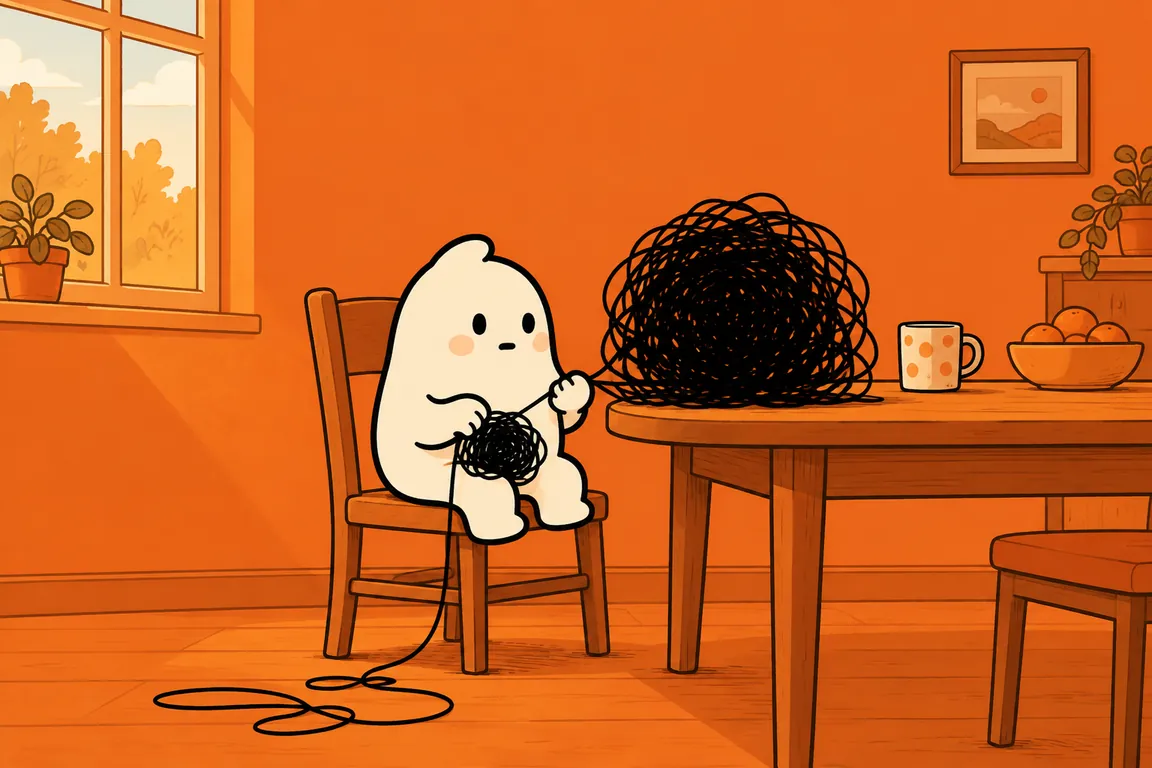
Mental replay does something similar. Vividly imagining an event increases confidence that it really happened, so the more times you run the scene, the more detailed and real it gets. That isn’t evidence. It’s what repetition does to a mental image. And people can report confident, detailed memories of events that didn’t occur, which is exactly why “it feels so real” can’t be used as proof in either direction.
Asking works the same way. People with OCD seek reassurance more often, from more people, and are less satisfied by the answer. The point of asking is to feel certain and to hand some of the responsibility over, and the relief doesn’t last. Confessing “just in case” is reassurance seeking under another name, and it tends to leave you needing to confess more precisely next time. If this is where you’re stuck, there’s more in how to stop asking for reassurance and how to stop OCD rumination.
How to handle the spiral the next day
The method is the same as for any OCD spiral: name it, skip the checks, and let the night stay unresolved while you get on with the day.

- Name what’s happening. Say it plainly: “This is an OCD spiral about last night.” Not “I need to work out what I did.” Naming it is usually the moment you get a choice.
- Catch the urge before you act on it. The urge to re-read the messages or replay the walk home arrives a second or two before your hand moves. That second is where the work happens.
- Drop the check, or delay it. No scrolling, no timeline building, no texting people to see how they react. If dropping it feels impossible, set a delay of twenty minutes and do something else with your hands in the meantime.
- Answer the what-if with “maybe, maybe not.” You can’t know for sure how the night went. Nobody can, drinking or not. That sentence is uncomfortable and it’s honest, which is why it works where reassurance doesn’t.
- Let the body feel bad without reading it into evidence. Hangover anxiety is physically unpleasant, and it doesn’t answer the question about the night either way. Let it be there.
- Ride the wave instead of ending it. Urge surfing comes from addiction work, where a single short session left smokers less driven by their cravings over the following week. You can ride the free wave when the urge to check is at its loudest.
- Go back to the day with the doubt still there. Make food, shower, text someone about something else. Carrying on while unsure is the exposure. Sitting still until you feel certain is the compulsion.
If the spike is hitting hard, how to sit with anxiety when OCD spikes and how to stop an OCD spiral go deeper into the same steps.
Is this false memory OCD or real-event OCD?
It can be either, and the response is the same. When the doubt is about whether something happened at all, and your “memory” of it arrives as a fuzzy image you’re not sure you lived through, that sounds like false memory OCD. When something did happen, you remember it, and OCD keeps going over what it means about you, that’s real-event OCD.
Drinking makes the two harder to tell apart, which is part of why the next day is so hard. This article won’t tell you nothing happened, because nobody writing about this can know that. What it can say is that more reviewing won’t produce the certainty you want, and that what helps is learning to live with not knowing for sure.
What should I do over the next few days?
Keep going as normal and let the night stay unfinished, including the parts OCD wants you to go back over. Each time you face a trigger and skip the ritual, you build new safety learning that competes with the old alarm, and that learning sticks better when you practice it in different places and moods rather than once.
That means not quietly checking a week later. It means not avoiding the friend you were with, the bar, or the group chat, because avoidance keeps the doubt alive just as well as checking does. If there’s an actual real-world thing to handle, an apology you’d make sober and clear-headed, make it once and then stop. Repeating it is a compulsion.
If these days keep happening, this is what planned ERP is for, done in small steps up an exposure ladder with support. Surf OCD is built on that method, and you can read what the evidence actually shows before deciding anything.
What if drinking has become part of how you cope with OCD?
Then it’s worth talking to a doctor or a clinician, and that’s a conversation without judgment in it. This article won’t tell you whether or how much to drink. What’s fair to say plainly is that anxiety problems and heavy drinking tend to reinforce each other over time, and that alcohol disturbs sleep, which is already a weak point in OCD.
If you’re drinking to get through spikes, or you’ve tried to cut down and found it harder than expected, that’s a reason to get help, not a judgment of your character. If the distress ever turns into thoughts of ending your life, please find a helpline in your country and speak to a person today. Surf OCD isn’t a crisis service.
 Straight answers
Why is my OCD so much worse with a hangover?
Because a hangover adds physical anxiety, poor sleep and gaps in memory all at once, and OCD treats each of those as something to resolve. A racing heart and dread get read as evidence that something happened. The sensations are real and uncomfortable, and they don't answer the question about the night either way. The response that helps is dropping the checks, not decoding the feeling.
How can I tell if a memory from last night is real?
You often can't, and that's the hardest part. Vividness, detail and confidence aren't reliable markers, because repeatedly imagining a scene makes it feel more real and more detailed. So replaying it to test it actually makes the test worse. The workable answer is to stop trying to verify, let the uncertainty sit, and get on with the day.
Is it okay to ask a friend what happened last night?
Asking once, casually, like anyone would, is different from asking to settle OCD doubt. If you're asking to feel certain, checking the wording of their reply, or asking a second person the same thing, it's a compulsion. Relief from reassurance fades fast and the urge returns stronger. It's usually better to leave the question unasked.
Should I stop drinking because it triggers my OCD?
That's your decision, and a doctor is a good person to think it through with. Cutting back is a reasonable health choice on its own. The OCD part to watch is avoiding every place, person or situation that might set off a spike, because that kind of avoidance keeps the fear in place.
How long does an after-drinking OCD spiral last?
It depends mostly on what you do, not on the alcohol. The physical edge of a hangover usually fades within a day. The doubt can run for days or weeks if you keep replaying, checking and asking, because each check restarts the loop. Dropping the checks is the part you control.
 Keep reading
Written by Edwin Simonds and checked against every source cited above. Not medical advice.
Ride the next one out
A free urge-surfing wave, right in your browser. No app, no sign-up, nothing recorded. The same tool is free in the Surf OCD app, in Wave Rider.
Surf an urge now